The small details on a lead rope
The clip, rope body and finished end all deserve attention when choosing a rope for ordinary yard handling.
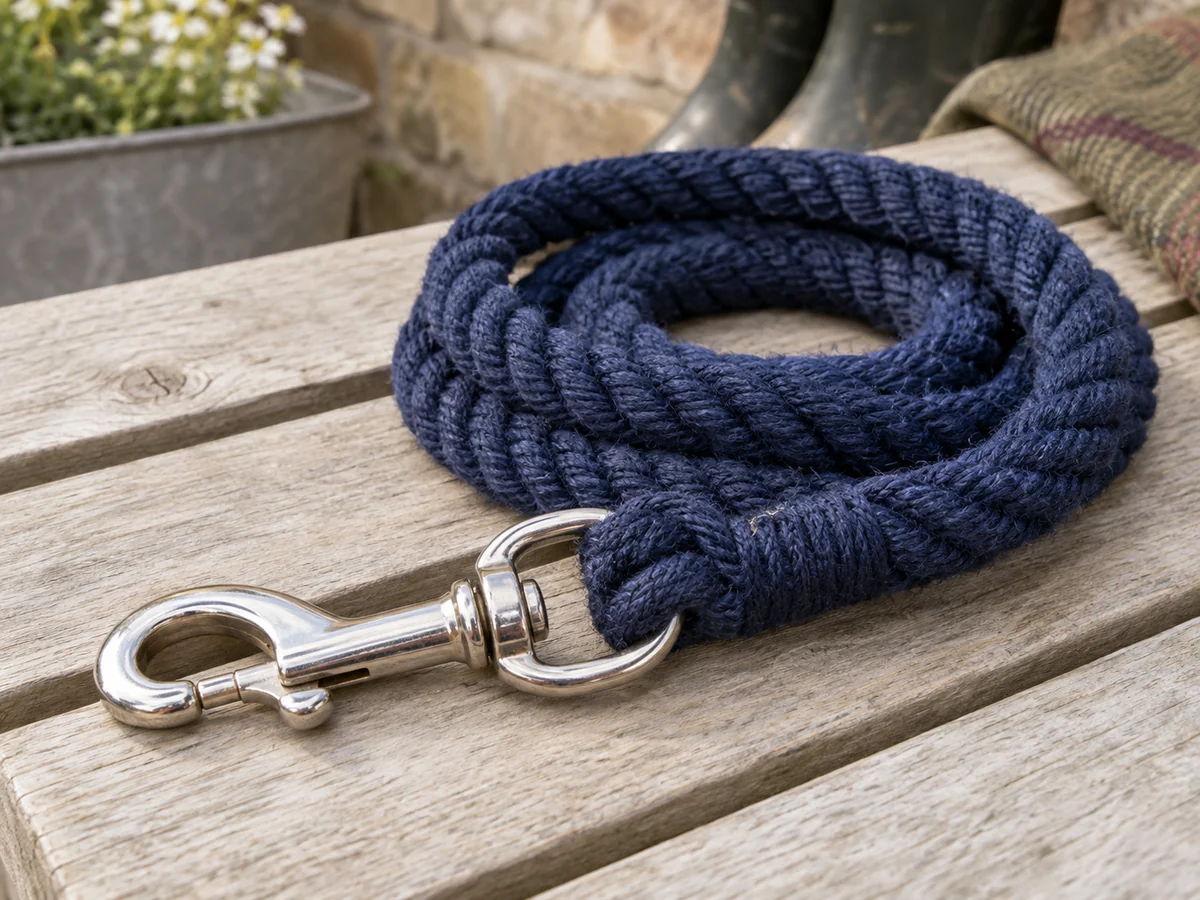
Start with the hand and the clip
A lead rope needs to be manageable in the handler's hands as well as suitable for its intended use. Compare the thickness and flexibility while wearing appropriate gloves. A very stiff rope can be awkward to organise, while a narrow one may be uncomfortable to handle. Ask the instructor what length and type suit the yard's routine before choosing by colour alone.
Operate the clip off the horse. It should open and close positively without sharp edges or an unreliable catch. Check how it joins the rope: stitching, a splice or another manufactured connection can conceal wear. A shiny clip does not compensate for a fraying attachment immediately behind it. Replace damaged equipment through the appropriate route instead of relying on a homemade join.
The rest of the rope matters
Run your eyes along the whole length and inspect the end. Mud can conceal damage, and a hard or swollen section may feel different from the rest. Follow the maker's care instructions, especially for ropes with a core or covered construction. Do not assume a surface that has dried clean is evidence that every part is sound.
Keep ropes intended for different tasks identifiable. A longer line used under instruction for another activity is not automatically a practical everyday lead rope. Extra length creates more material to manage around feet and equipment. Learn how to carry the spare rope without wrapping it around the hand or body; a competent handler should demonstrate this in person.
Plan the handling, not just the purchase
Before leading, check the designated attachment on the correctly fitted headcollar and the route you will take. Gates, other horses and clutter can matter more than a small difference between two rope materials. If the horse is difficult to handle, ask for suitable training and professional help rather than buying a stronger clip and expecting the problem to disappear.
For tying, use the yard's appropriate breakaway arrangement and a correctly taught quick-release method. The lead rope itself is only one part of that system. After use, store it where the clip remains clean and the rope cannot trail into a walkway. Dry damp ropes before closing them into a container, and keep a damaged one clearly out of service so it is not picked up by the next person.
Reading & references