Look closely at stitching before the next ride
Clean tack and good light make loose threads easier to notice, but appearance alone cannot certify strength.
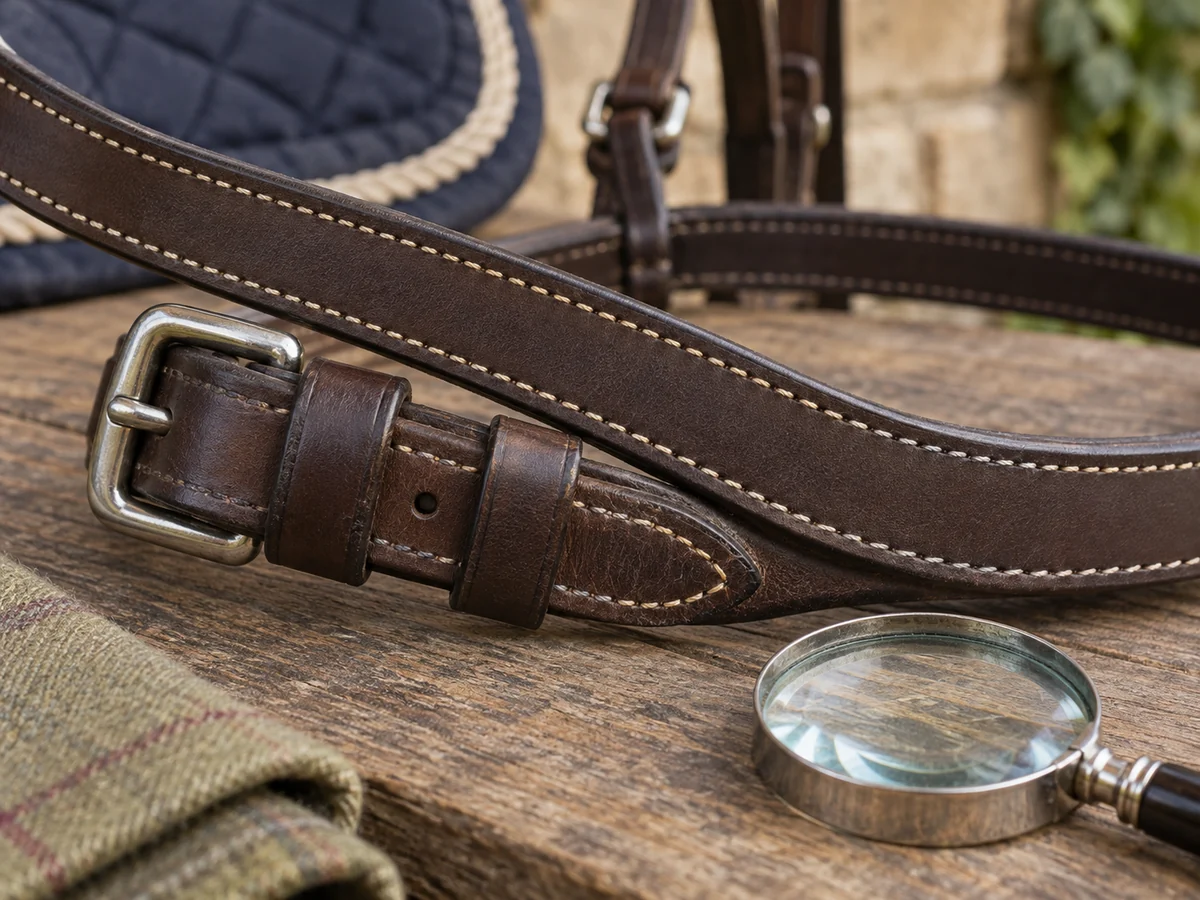
Use a clear surface and steady light
Inspection is easier when leather and fittings are clean enough to see. Place the item on a stable surface and move it so light falls across the seams. A dark tack room, a wet coating of conditioner or a hurried glance while carrying a saddle can hide small changes. Work through one item at a time so that you know which areas you have actually examined.
Start with places that are folded, fastened or repeatedly moved. Buckle attachments, stitched loops and the joins between different materials deserve a deliberate look. Compare neighbouring sections for loose ends, gaps, abrasion or a change in the way the layers sit together. Do not cut away a projecting thread simply to tidy the appearance before establishing whether it is part of a failing seam. A neat line of stitches does not tell the whole story. Look at the leather or fabric on either side, including any stretching, splits or damage around holes. Dirt can gather along an edge and make it difficult to distinguish a mark from a separation. Clean only by the appropriate method; scraping aggressively to expose the seam may damage the very area you are trying to assess.
If something looks different from the last inspection, take a clear photograph and record where it is. Include the whole item as well as a close view so a saddler can identify the location. Photographs help explain a concern, but they may not be enough for a reliable decision. Ask whether the piece needs to be examined in person rather than pressing for reassurance from an image.
Keep a doubtful item out of circulation
Mark suspect equipment clearly and separate it from the set normally used for riding. In a shared yard, tell the people who might otherwise pick it up. A note hidden in a phone does not help someone reaching for a girth before a lesson. Avoid improvised stitching, glue or a home strength test on a load-bearing component.
Have repairs or replacement assessed by a suitably experienced saddler or the manufacturer. Record the outcome so that the item is not returned to use simply because time has passed. Regular inspection helps you notice change; it does not guarantee that every hidden weakness will be visible. Treat unexplained damage and a known incident seriously even when the remaining stitches look tidy.
Reading & references