Pack for a show without emptying the tack room
Pack for the horse, rider and timetable you actually have, keeping essential equipment separate from optional extras.
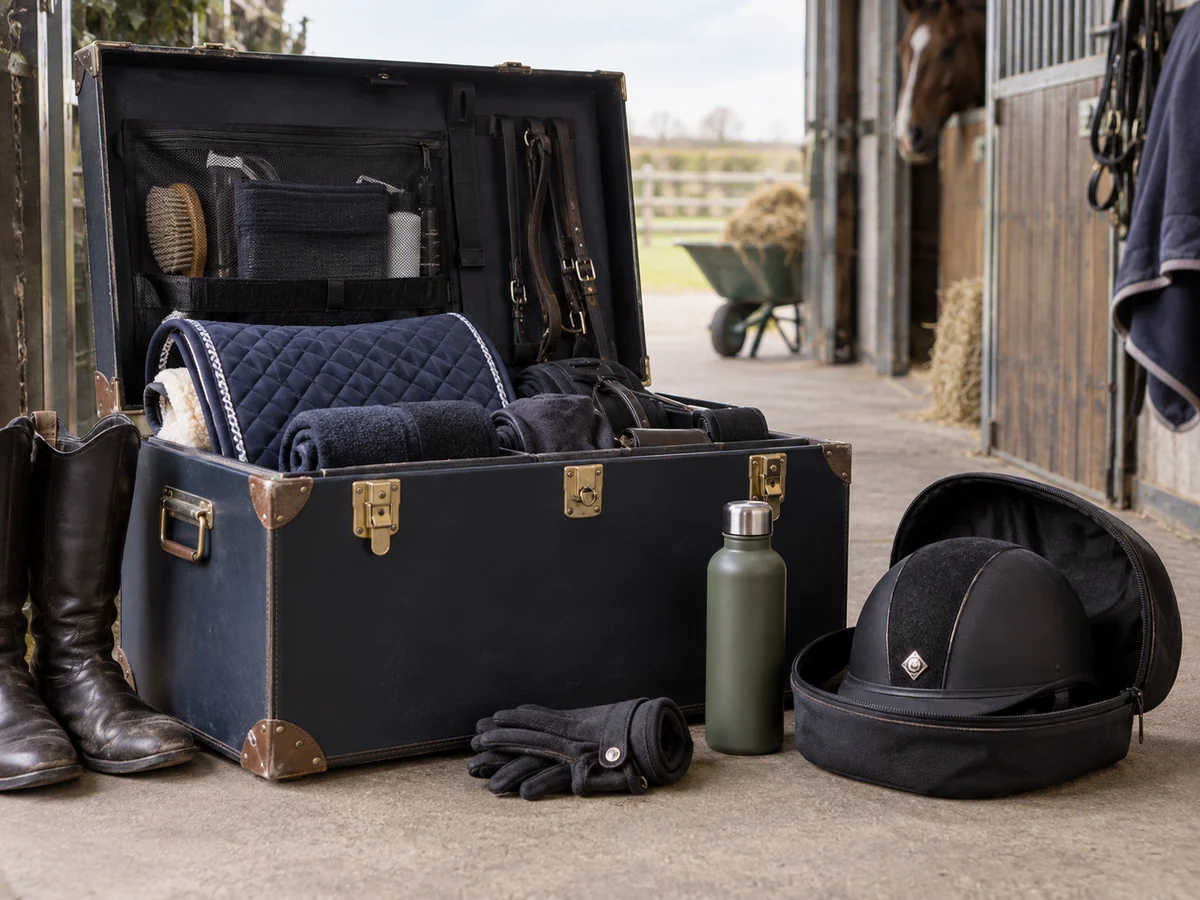
Build the list from the day
Start with the activity, venue and expected length of the outing. Check current event requirements with the organiser rather than assuming last year's kit is still appropriate. Then list the horse's assessed tack, the rider's required equipment and the practical supplies needed for the day. A list copied from a different discipline can be both overfull and incomplete.
Separate essential items from conveniences. The fitted saddle, bridle and suitable rider protection should not be lost among grooming extras and spare colours of pad. Ask an experienced person to review the list if this is a first outing. It is easier to remove an unnecessary item at home than to discover at the venue that the important equipment was left on its usual hook.
Pack by when the item is needed
Keep equipment for arrival and preparation accessible without unloading everything. Place clean clothing and pads away from dirty boots or leaking bottles. Use suitable protective bags, but check their care and ventilation instructions rather than enclosing damp equipment automatically. A padded bag protects surfaces only when its contents are packed sensibly and not crushed beneath unrelated luggage.
Label bags in a way another helper can understand. Horse's name and contents are more useful than a private nickname for the bag. Keep small compatible spare parts together and make sure they have a genuine purpose. An unfamiliar spare bridle or girth is not a useful emergency solution simply because it is somewhere in the vehicle.
Leave a note for last-use items
Some equipment may be needed until shortly before departure. Put those items on a separate final-loading note rather than ticking them off when they are merely set aside. Agree who checks them into the vehicle. This avoids the common problem of two people each assuming the other packed the saddle or rider's boots after the last use.
Plan the return routine as well. Keep a place for wet or dirty kit so it does not contaminate clean items on the journey home. Unpack promptly, inspect for damage and follow the appropriate cleaning and drying instructions. Amend the list after the outing while the useful details are fresh: what was missing, what was carried unnecessarily and what needs replacing. The next packing session should become simpler through experience, rather than expanding into a larger collection of just-in-case equipment every time.