Why a familiar saddle needs another look
An unchanged saddle can sit differently when the horse beneath it changes shape, fitness or workload.
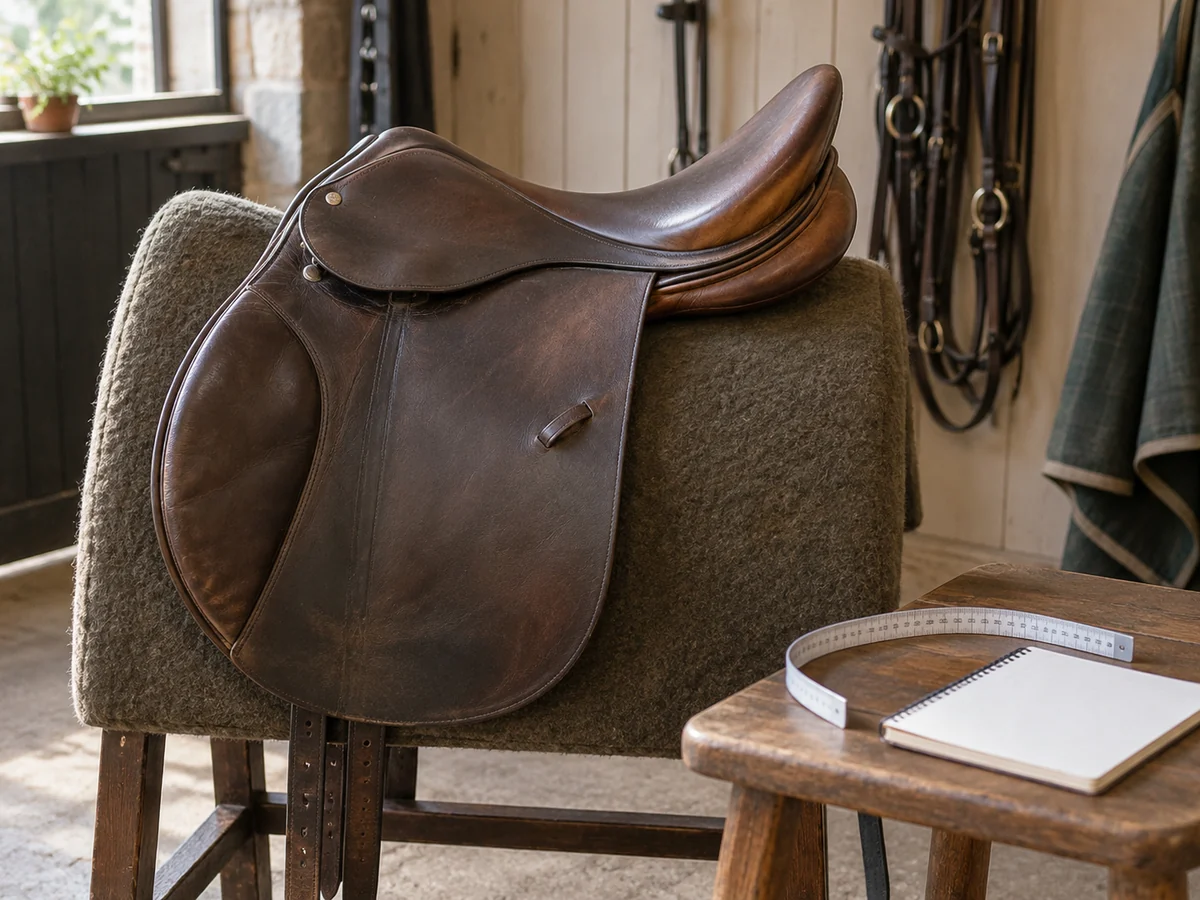
The saddle has not changed, but the horse may have
It is easy to trust a familiar saddle because it fitted at the last appointment. That appointment was an assessment of a particular horse and rider at a particular time. Weight, muscle development and work can change, so the old fitting remains useful history rather than a promise about the present arrangement. The transition from winter turnout to regular schooling is one occasion to pay closer attention.
Look back at what has changed in the horse's routine. Has there been a break from work, a different rider, an altered feeding plan or a return after illness? Write the dates down if possible. This gives the fitter a more useful starting point than a vague impression that something feels different. It also helps separate a recent concern from a feature you have always noticed.
Notice changes without trying to diagnose them
A saddle that now moves, a pad that repeatedly slips or a rider who suddenly feels tipped forward deserves attention. These observations do not tell you the cause by themselves. Nor does a tidy sweat pattern prove that a saddle fits. Take recurring changes seriously without turning a photograph or one ride into a home diagnosis.
New discomfort during tacking up or riding should be discussed with appropriate professionals. Stop and seek advice rather than tightening the girth repeatedly or adding more padding to make the behaviour disappear. If the horse appears painful or unwell, veterinary advice may be needed alongside the saddle assessment. Buying another accessory is not the first answer to an unexplained change.
Make the next assessment easier
Keep the usual equipment together and note the combinations that were used when the concern appeared. A thick winter pad replacing a thin cotton one is relevant information. So is a recently replaced girth. Tell the fitter about these changes even if they seem too small to matter, and arrange an assessment of the full setup rather than asking only whether the saddle looks wide enough.
Ask for an individual review schedule that reflects the horse's age, work and rate of change. Put the next reminder somewhere you will see it, but contact the fitter sooner if circumstances alter. Between visits, a short factual record is enough: date, workload, equipment and what you noticed. You do not need elaborate charts. You need a clear account that helps someone examine the horse and saddle in context.
Reading & references