Read the labels inside a riding hat
Read the standard, its date and any required certification mark as a complete combination.
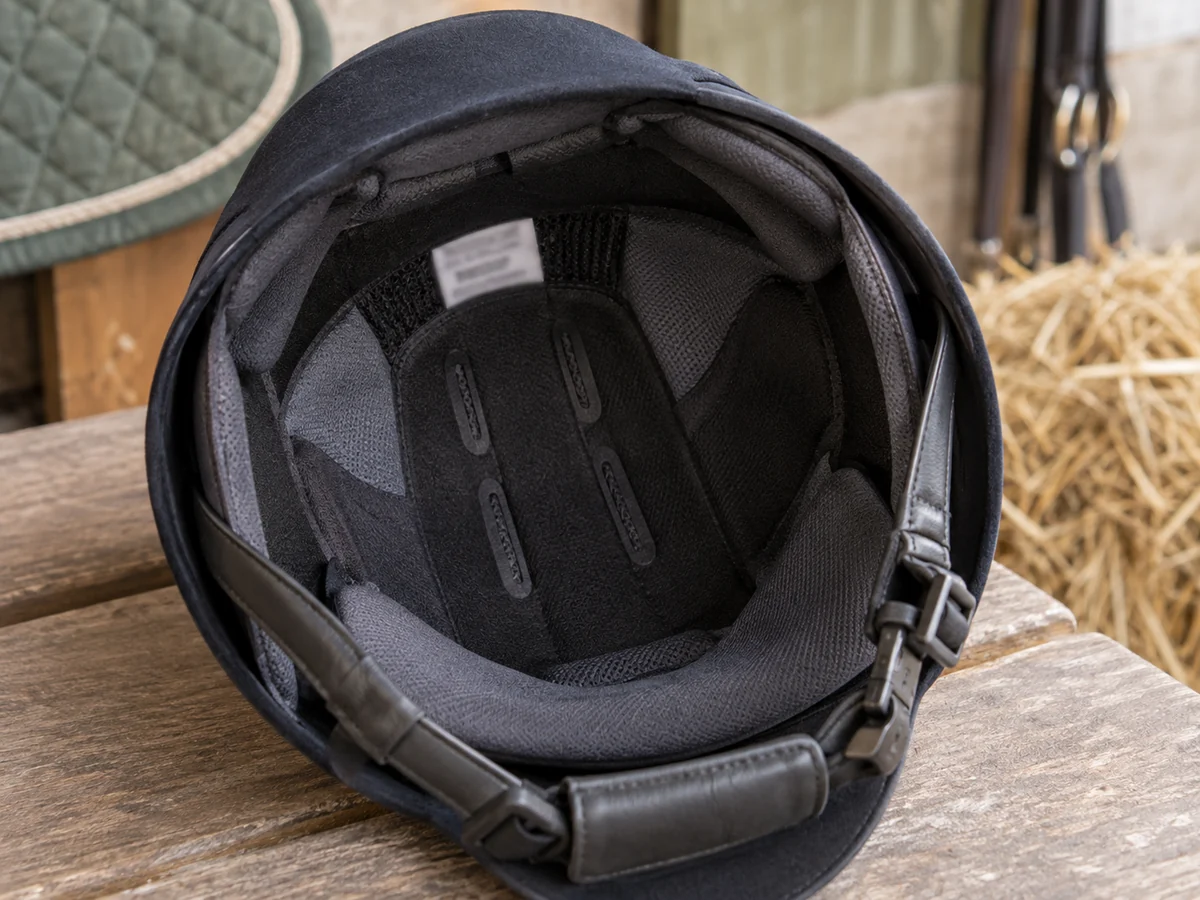
Find the actual label
The label inside a riding hat provides information that a product name or colour cannot. Look for the stated standard and edition, along with the relevant quality-assurance or certification mark. Keep the label legible. A retailer's web description can help when shopping, but an event official may need to inspect the marking on the hat itself.
Several standards may appear together. That does not mean every printed code performs the same role. A size, batch number, conformity marking and safety standard are different pieces of information. If you cannot identify which is which, ask a trained hat fitter to explain the label rather than guessing from the most prominent logo.
A date can change the meaning
Rules may specify a particular edition of a standard and a corresponding certification mark. For example, the BHS Equestrian Access Groups' 2026 guidance lists PAS 015 (2011) with a BSI Kitemark or Inspec IC Mark among its accepted combinations. That is a specific example from that organisation's current document, not a universal list for all riding activities.
Always check the relevant rulebook for the date and type of event you intend to attend. A label accepted under last season's guidance may need another check, and another organisation may apply different requirements. Ask the organiser before purchasing if the model's markings or style are uncertain. Save the response and the product details so that you can refer to the exact hat discussed.
The marking does not assess your particular hat
A standards label concerns the product's certification; it cannot tell you whether your particular used hat has been damaged, fits your individual head shape or has been cared for correctly. A hat with accepted markings still needs an appropriate fitting and inspection routine. Do not buy a poorly fitting model because it has a long list of standards on the label.
Keep the manufacturer's replacement and care instructions with the purchase record. Avoid covering or removing internal labels during cleaning. If a label becomes unreadable, contact the maker or organiser for advice rather than writing the code back in by hand. Clear identification helps future checks, but it should always sit alongside attention to condition, impact history and correct fastening.