Leather and synthetic half chaps need different care
Read the material label before treating half chaps as either leatherwork or washable clothing.
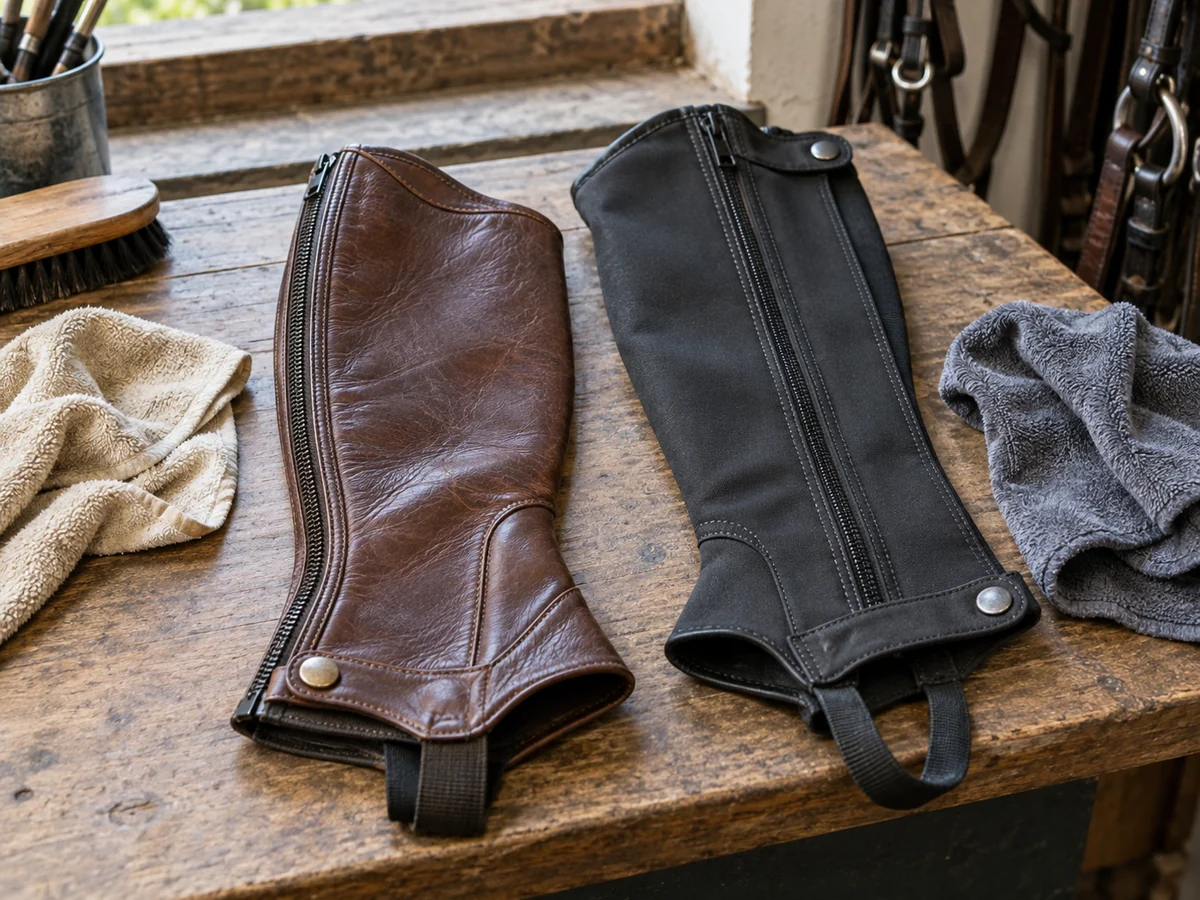
Identify the panels as well as the main material
Half chaps may combine leather or synthetic fabric with elastic, reinforced sections and a zip. The largest visible panel is not the only part that matters during cleaning. Find the manufacturer's care instructions for the model, particularly before using a washing machine. A method that suits one synthetic design can still be unsuitable for another with different backing or trim.
Remove loose dirt with a suitable soft tool, keeping grit away from the zip. Pay attention to the lower section, where mud from boots can accumulate. Check any strap or reinforced area beneath the foot according to the design. If a seam is worn or a fastening damaged, make a note before cleaning obscures the original appearance and arrange advice about repair or replacement.
Choose the appropriate route
For leather chaps, use only care products approved for that leather and finish. Keep them away from elastic or lining where the instructions require it. Suede-like surfaces may need a different approach from smooth leather. Do not judge compatibility by whether a product has worked on a saddle; the materials and finishes may differ substantially.
For a washable synthetic pair, follow the stated cycle, detergent and fastening instructions. Avoid making a universal rule about temperature or tumble drying from a single label. Remove trapped debris before the wash and leave enough room for the item to rinse. Check the clean pair afterwards for detergent residue, twisted sections or any fastening that caught another item in the load.
Let them dry in their intended shape
Dry the chaps away from unsuitable heat, with the material supported rather than sharply folded. Allow elastic and lined sections enough time to dry fully. Do not pull them onto a boot simply to stretch out a shape that has changed during washing. If they no longer sit or fasten normally, ask the maker or retailer for advice before forcing them closed.
Store the pair together when dry, somewhere that does not crush the zip or trap dampness. Before the next ride, check that they work with the boots and clothing you intend to wear. Thick winter layers can change the feel of a previously comfortable combination. Clean equipment should still be checked in use; successful washing is not a substitute for a comfortable, appropriate fit.
Reading & references