Keep grooming tools apart from clean tack
Give dusty brushes and dirty tools their own place so they do not undo the work of cleaning tack and clothing.
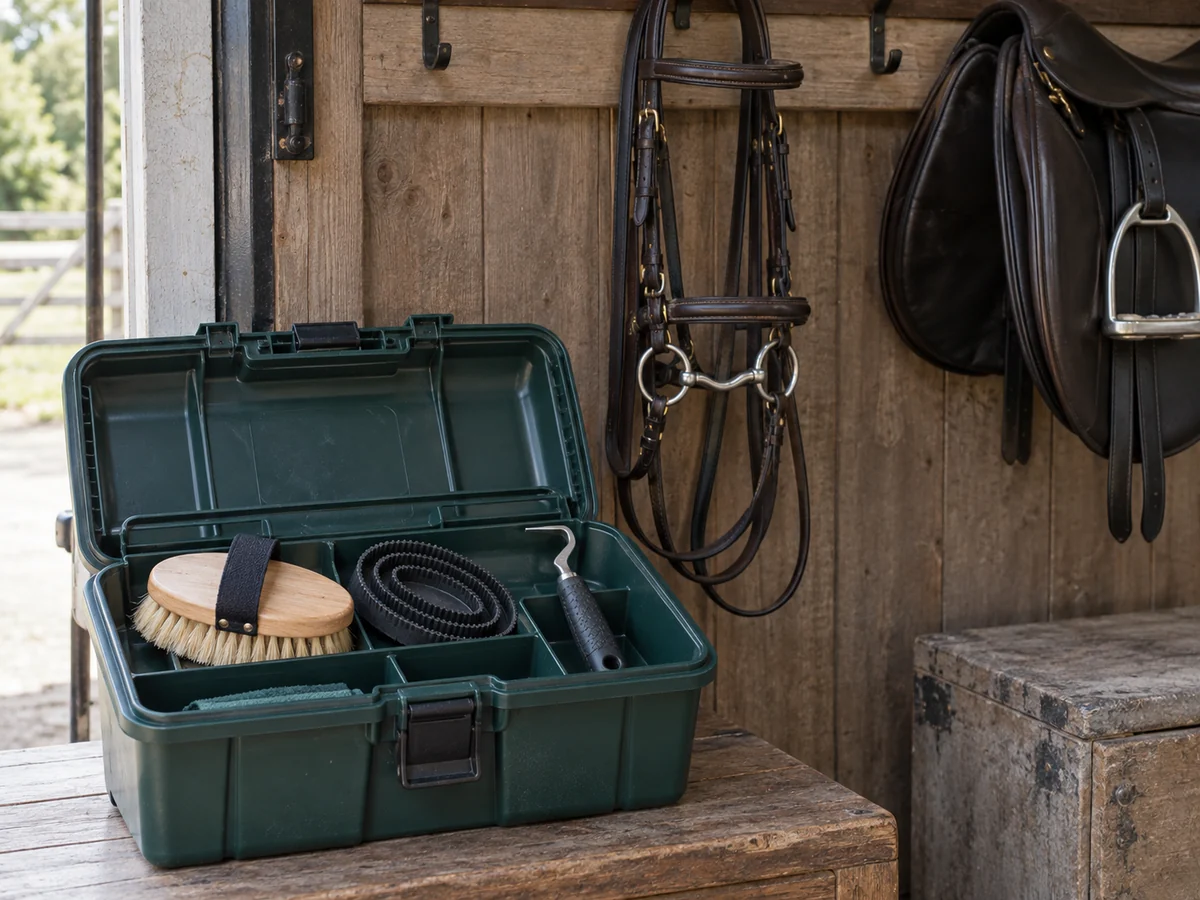
Separate the jobs physically
A grooming brush collects hair and dust because that is part of its job. It does not belong on top of a freshly washed saddle pad while someone searches for a hoof pick. Choose a dedicated tray, box or shelf for grooming equipment and keep it apart from clean tack. The separation can be modest, but it should be obvious enough to survive a busy morning.
Assign individual kits where the yard's management requires them and label them clearly. Do not assume that brushes should be shared freely between horses. Follow the yard's hygiene arrangements and seek appropriate advice where there is a skin or infection concern. Storage organisation helps people follow a routine; it does not replace decisions about cleaning or biosecurity.
Make the box easy to empty
Removable trays can be useful because the bottom of a grooming box tends to collect loose hair, dirt and small forgotten objects. Choose a design that lets you reach the corners rather than one with so many compartments that cleaning becomes awkward. Check the product's care instructions. LeMieux's hard-shell box, for example, is described as wipe-clean, which is different from permission to soak the whole construction.
Keep liquids upright in suitable containers and follow their labels for storage. A leaking bottle can coat every handle in the box and make a quick clean much longer. Do not decant products into unlabelled containers simply to make them fit a small compartment. It is better to store an awkward bottle separately than to lose the instructions and identity of its contents.
Sort the small items deliberately
Put sharp or pointed tools where they can be retrieved without rummaging blindly among brushes. Check handles and surfaces for damage during the regular clean-out, and remove items needing attention. A broken tool left in the tray tends to be used again because it remains the closest option. Keep repair or replacement decisions separate from the ready-to-use kit.
At the end of the routine, remove loose debris and return dry items to their place according to their care guidance. Leave room for the equipment actually used rather than filling every gap with duplicates. A compact, identifiable kit is easier to carry and clean than a large box containing three worn versions of the same brush. The goal is to find the right tool without spreading dirt across the rest of the tack room.