Questions about elastic in a girth
Elastic changes how a girth behaves, so compare the complete design rather than choosing by softness alone.
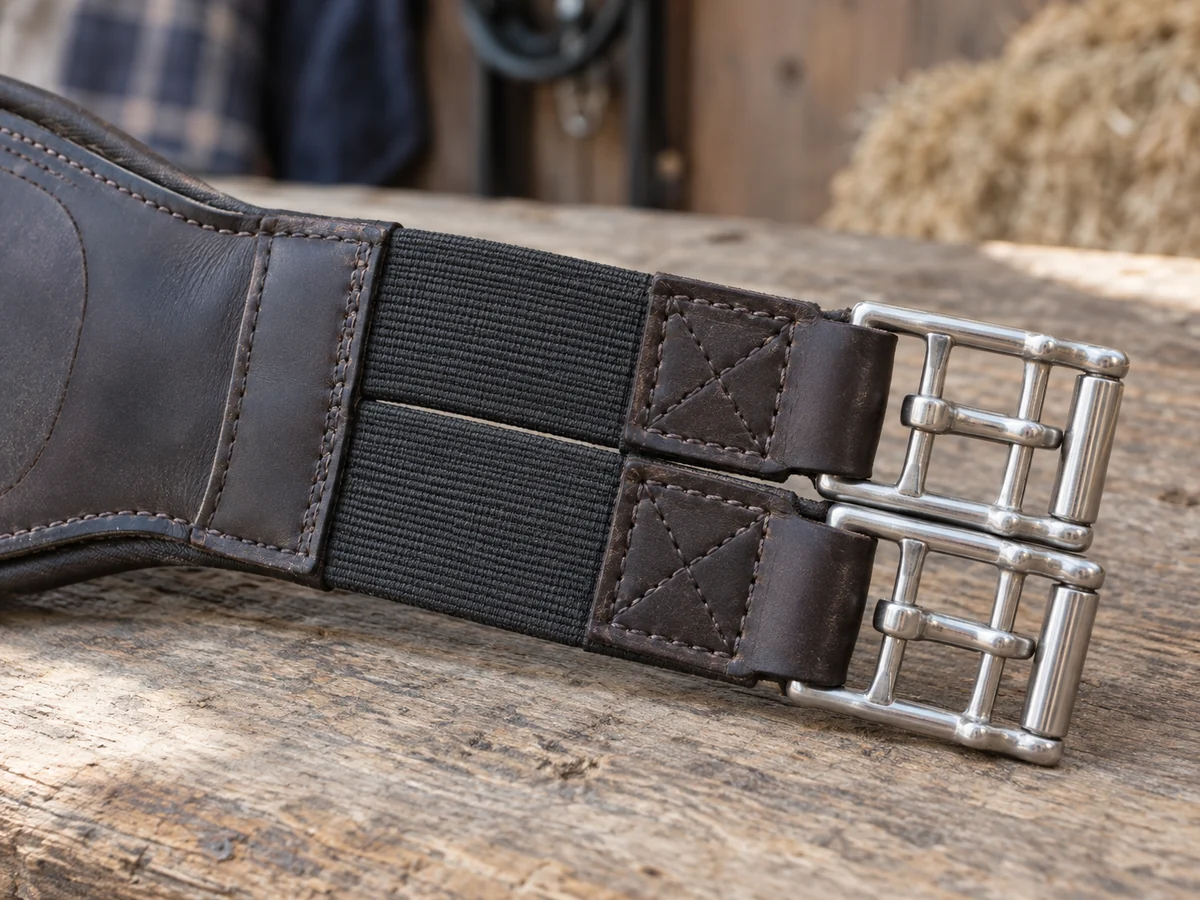
Find out what the elastic is doing
Elastic may appear at one end, both ends or within a more unusual girth design. Those arrangements should not be treated as interchangeable. Look at the whole product, including the width of the body, the buckle protection and the maker's instructions. A listing that merely says elasticated leaves out the details needed to compare it with the girth already being used.
Ask how the manufacturer expects the girth to be fitted and adjusted. Do not borrow instructions from a different design because the materials look similar. With a specialist system, check whether a particular pad or replacement part is required and whether it is included in the price. Missing components can turn an apparently complete purchase into an item you cannot use as intended.
An elastic section can make the buckle feel easier to fasten, but that does not tell you whether the final tension is appropriate. Avoid using the number of holes reached as a target. Ask your saddle fitter or instructor to demonstrate correct girthing for the actual equipment and horse, following the manufacturer's guidance rather than a rule passed around the yard.
When comparing a used girth, look at whether the elastic sits evenly when relaxed. Ask about stretching, repairs and replacement sections. A photograph under tension may hide a difference between the ends, so request a flat, unstretched view. Neither a neat appearance nor a firm pull provides a reliable assessment of how much service life remains.
Consider the routine around it
Look at how easy it will be to keep the elastic and nearby folds clean. Hair and grit can collect around protected buckles and layered sections. Check the care instructions before assuming the whole girth can go into a washing machine; mixed leather and textile construction often calls for more specific treatment. Choose a routine you can actually maintain between rides.
Keep the discussion focused on your horse and saddle. If the current girth causes rubbing or the saddle moves, changing to more elastic is not a diagnosis or a guaranteed remedy. Arrange an assessment and explain what you have noticed. The useful purchase is a compatible, correctly fitted girth with clear instructions and available parts, rather than simply the one that feels most flexible in your hands.
Reading & references