What to look at in a fly veil
Ear shape, seams and the space beneath the bridle matter more than matching the saddle pad.
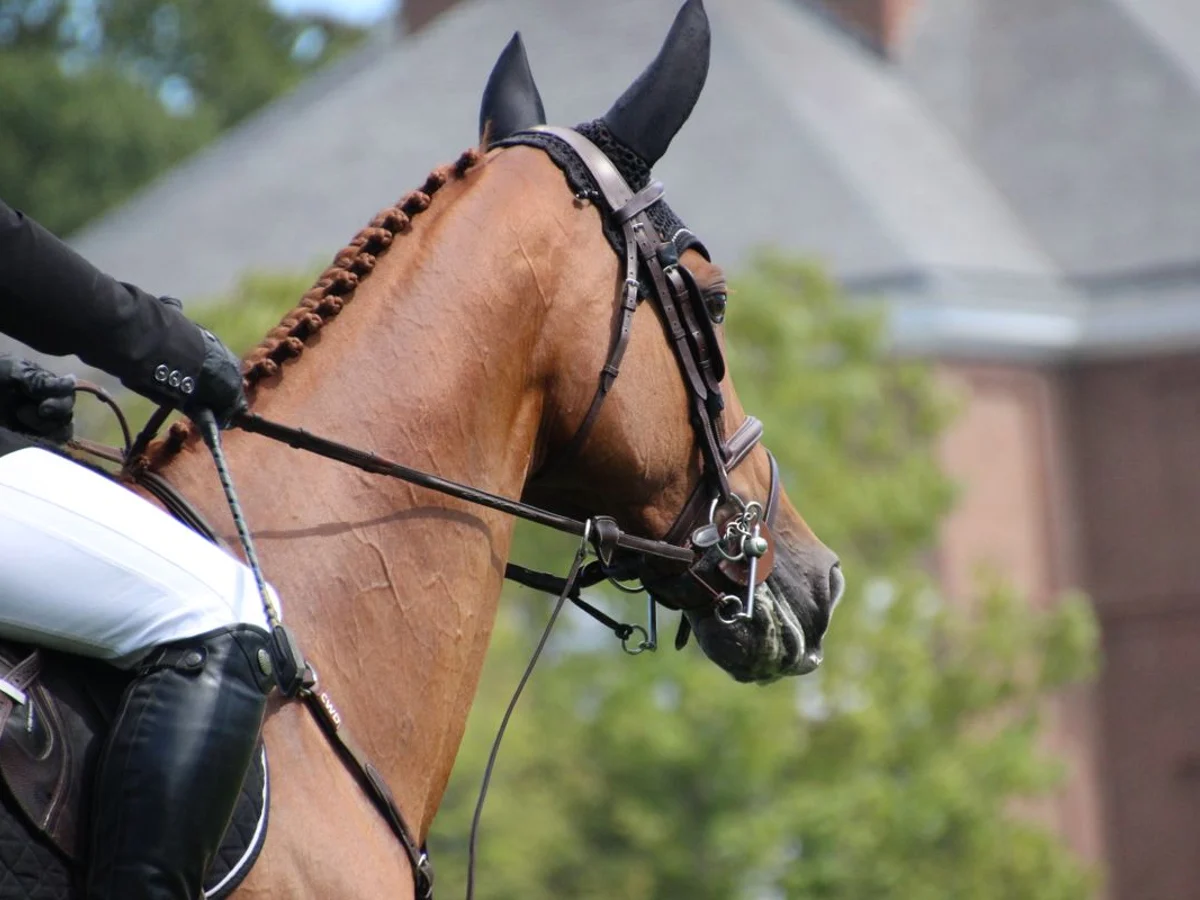
Different items can share the name
A fly veil or ear bonnet used during riding usually covers the ears and a section of the forehead. A turnout fly mask covers a different area and is intended for another setting. Check which item the product listing describes. Photographs taken without a bridle can make the distinction less obvious, especially when several fly-protection products appear in one collection.
Riding veils may have simple fabric ears or additional material described as noise-reducing. Do not infer a particular protective effect from thickness alone. Read what the manufacturer actually claims and check whether the model is permitted for your intended activity. A decorative bonnet and an acoustic design may look similar from the outside while being treated differently by competition rules.
The ears need their own space
Compare the ear shape and length with the horse under appropriate supervision. Material should not pull tightly at the base or fold uncomfortably inside the tips. Seams, labels and decorative attachments deserve inspection on the inside. A bonnet that looks flat and elegant on a table can sit quite differently once the ears and bridle are in place.
The front section also sits near the browband and headpiece. Additional fabric changes the layers in that area, so check the complete bridle arrangement. Do not use the headpiece to clamp an unsuitable veil in place. If it slips, bunches or creates rubbing, identify the cause and ask for fitting advice rather than adding an improvised tie.
After riding
Remove the veil and look for sweat, hair and grit around the ear bases. Wash it as the label directs and reshape gently if instructed. Stretching a wet crocheted front aggressively can distort it, while direct heat may be unsuitable for elastic fabrics. Let the ear sections dry inside as well as outside before folding the item away.
Keep the product details if you need a replacement. Different sizes from the same brand may change both ear length and forehead width, and decorative trim can alter the usable shape. If a horse becomes sensitive around its ears, do not assume insects are the only explanation. Seek appropriate advice and check the equipment instead of fitting a thicker veil to conceal the reaction.