Looking at a fly rug beyond the mesh
Look at the cut, coverage and fastening system as closely as the mesh, and plan how the horse will be checked underneath.
Coverage has to work in movement
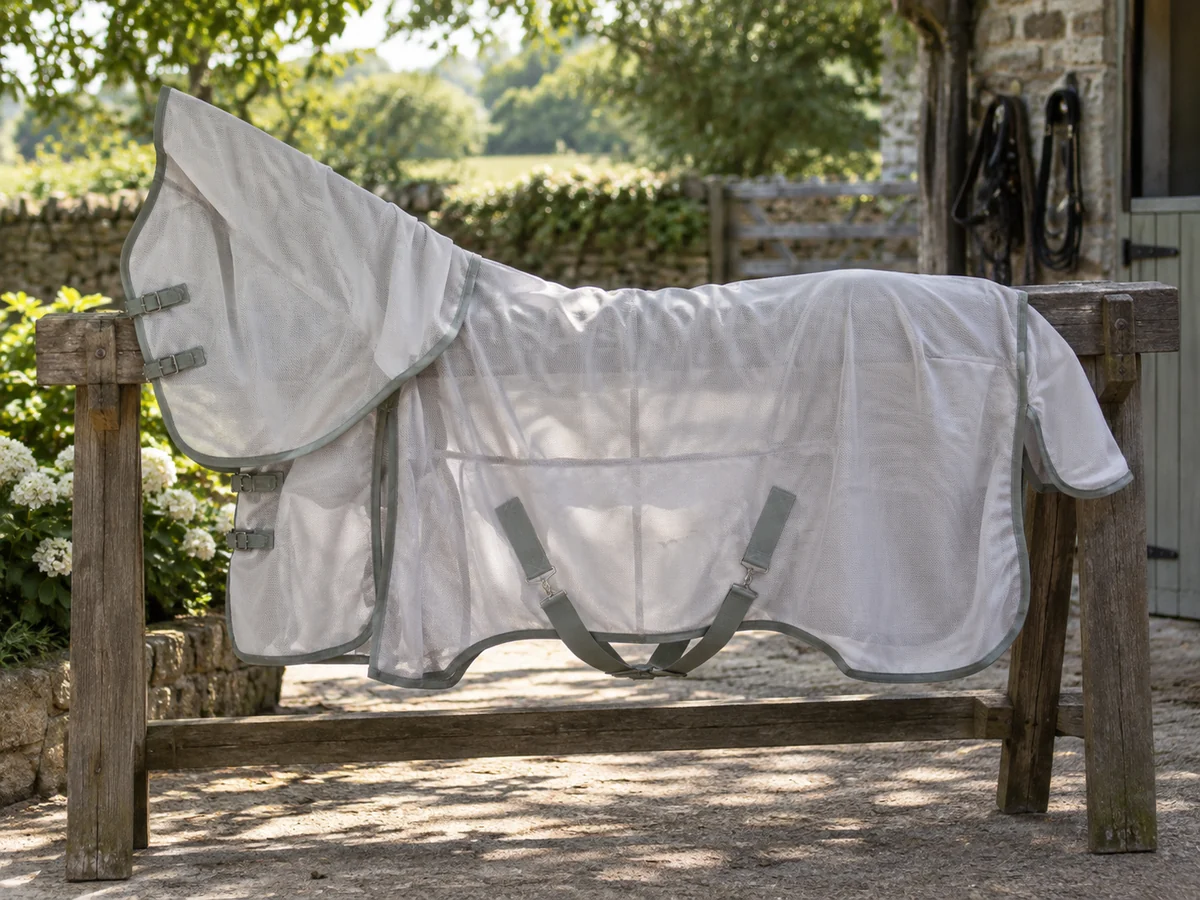
Mesh is the most obvious feature of a fly rug, but its outline matters just as much. Compare the chest, belly coverage, tail area and any neck section. A product can cover a large area in a catalogue photograph and still be the wrong cut for an individual horse. Use the maker's measuring instructions and ask for help assessing the fit rather than selecting from height alone.
Think about the horse's routine and the reason for buying. General insect protection, a particular management plan and a rug recommended for a specific skin problem are not automatically the same purchase. If the horse has persistent irritation or damaged skin, seek veterinary advice rather than expecting a generic fly rug to explain or resolve the cause.
Read claims precisely
Some products make additional claims about ultraviolet protection or specialist fabric treatments. Check whether the claim applies to the whole garment or a particular panel and look for the manufacturer's explanation. Do not assume all light-coloured mesh offers the same protection. If a feature is important to the purchase, ask for the relevant specification instead of relying on a retailer's short headline.
Look at how the belly flap and straps are adjusted, and whether replacement fastenings are available. A complicated arrangement is not necessarily a problem, but everyone caring for the horse needs to understand it. Keep the instructions with the rug details. Where a neck is detachable, verify that it belongs to that model and does not merely resemble the correct attachment system.
Make room for daily checks
The rug needs to be removed for regular inspection of the horse and the garment. Check areas prone to rubbing and look for trapped debris or damage to the mesh. Do not let the ability to see through part of the fabric replace a proper check underneath. Ask for advice if the rug repeatedly shifts, restricts movement or causes discomfort.
Before ordering, consider washing and drying as well as the purchase price. Mesh can catch on rough storage surfaces, and fastenings need to be managed according to the care label. A second-hand rug deserves clear photographs of the underside, seams and repairs, not just a distant view hanging on a fence. Choose an item whose condition and fit can be assessed, then continue checking it as part of the horse's ordinary care.
Reading & references