When an exercise sheet enters the picture
An exercise sheet has to work with a moving horse, the saddle and the rider's leg.
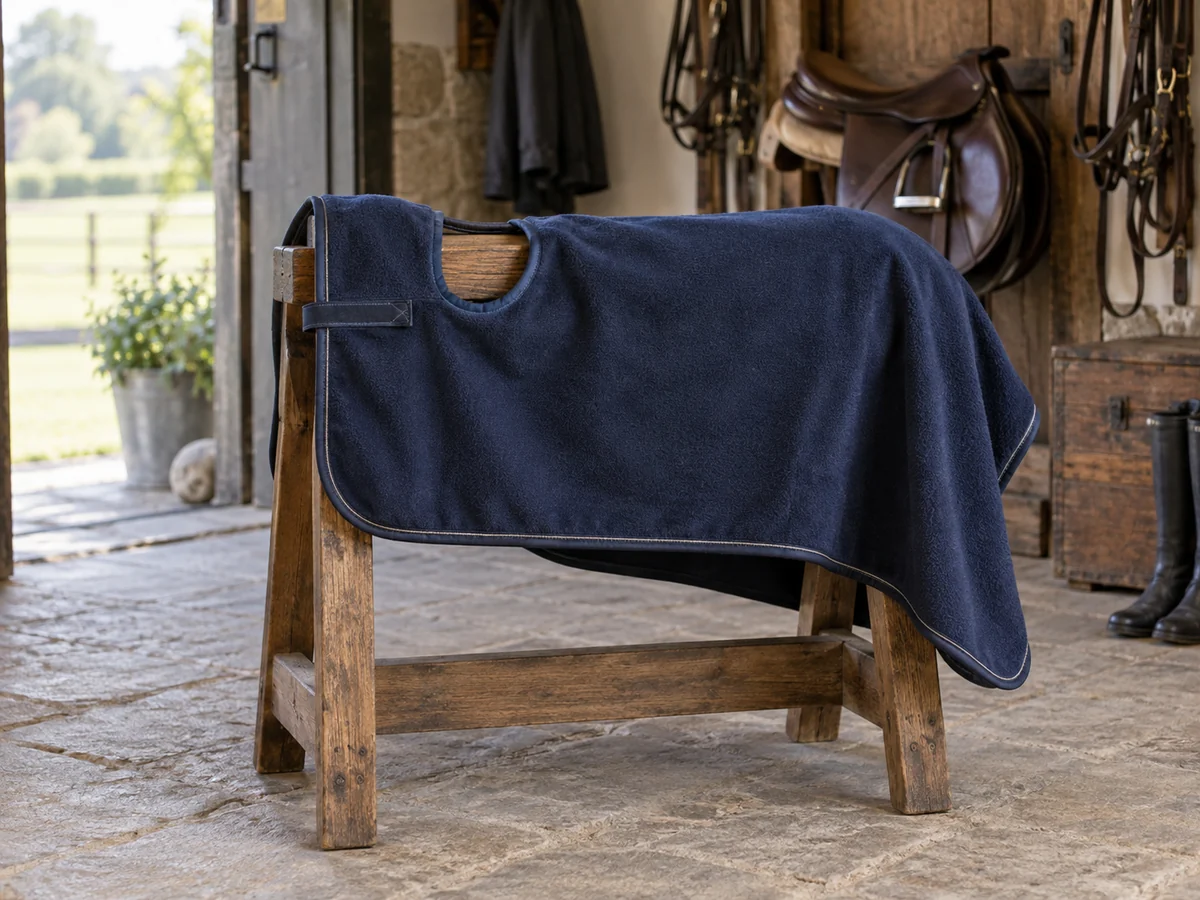
Understand the design before the weather
Exercise sheets come in different arrangements. Some fit around the saddle area, while quarter sheets cover mainly the hindquarters. Materials range from fleece-type fabrics to weather-resistant outer layers. The design determines where the fastening goes and how the sheet interacts with the saddle. Check the instructions rather than copying a different sheet seen at the yard.
Whether one is useful depends on the horse, clipping, conditions and work, among other factors. A cold morning does not create a universal requirement for every horse. Discuss the routine with someone knowledgeable about the individual animal. The sheet should support an appropriate management plan rather than become an automatic extra layer that remains on regardless of how the session develops.
Check every edge and connection
Look at the position around the saddle and the room for the rider's leg. No part should be trapped in an unintended place or flap where it interferes with the horse. Follow the specified fastening route, including any rear strap arrangement. Do not improvise a connection to a convenient buckle because the supplied straps do not reach.
Introduce unfamiliar equipment under suitable supervision in a controlled setting. A horse can react to movement or sound from a new sheet, even when it has worn stable rugs happily. If the sheet shifts, the saddle fit and the sheet's own size and design need checking. Pulling every fastening tighter is not an adequate way to diagnose the cause.
Plan when it comes off
Ask how the sheet should be used during warm-up, work and cooling down for your horse. Monitor comfort and avoid continuing to add warmth when the horse no longer needs it. Removal or adjustment should follow a safe routine taught by the instructor; do not wrestle with loose fabric from the saddle while also managing an unsettled horse.
After use, open the sheet out to inspect the lining and dry it. Store it away from the next day's clean saddle pads if it is muddy or wet. Check closures before each use and retain the care label details. A missing label is a reason to identify the product, not to assume that the waterproof-looking outer can be washed like an ordinary fleece blanket.
Reading & references