Make room for wet kit to dry
Plan where wet equipment can hang with room around it, without dripping onto clean tack or blocking the way through the yard.
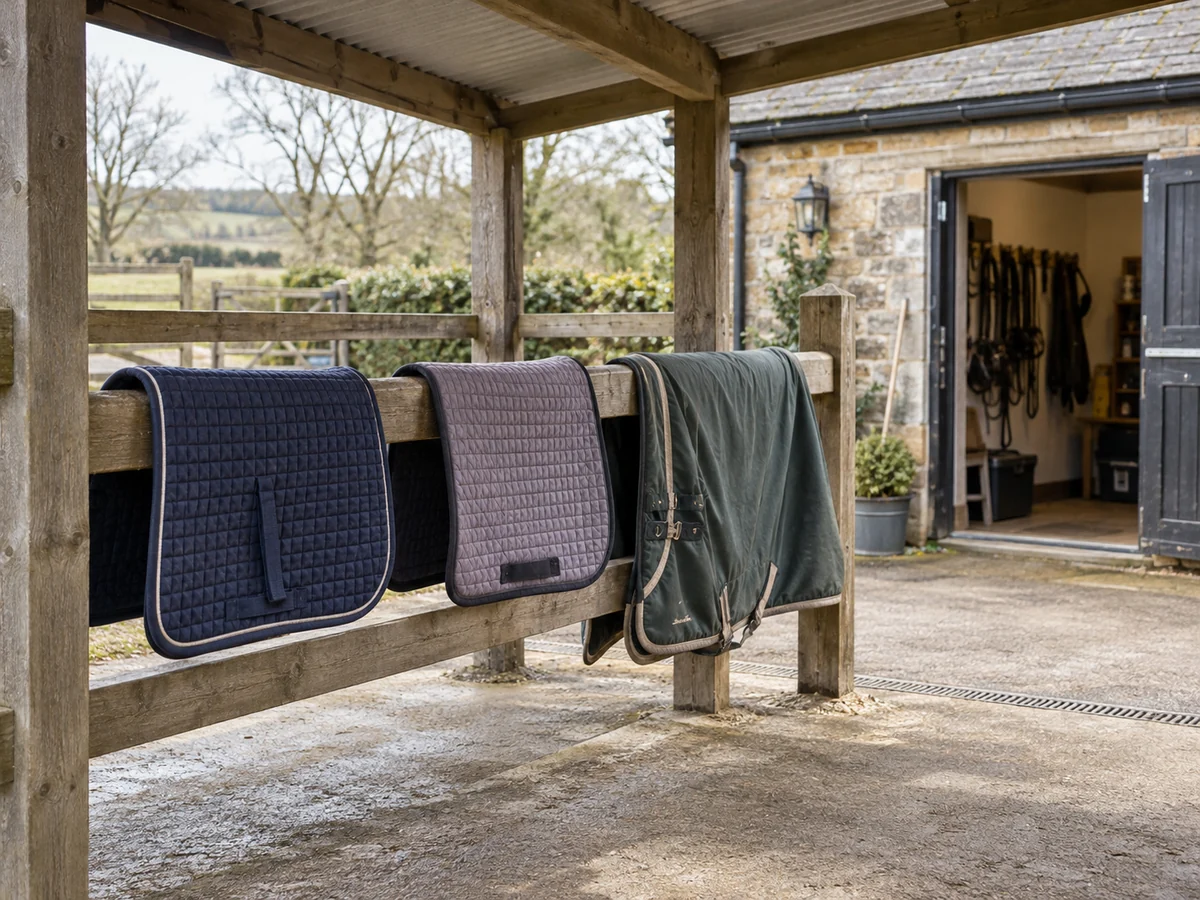
Separate drying from putting away
After a wet ride, it is tempting to return every item to its normal hook and close the door. A better routine includes an intermediate place where damp equipment can dry as directed. Decide which items arrive wet most often and how much space they occupy when opened out. A rail that holds three folded pads for storage may not hold three pads effectively while they dry.
Keep the area clear of clean leather tack and anything that could be damaged by drips. Think about the floor too: water beneath a rail should not create a slippery route through a doorway. Ask the person responsible for the premises to address unsuitable surfaces or drainage rather than treating a pile of towels as a permanent solution.
Give each material the right treatment
Leather, rugs, boots and protective equipment can have different drying instructions. Follow the maker's guidance instead of putting everything beside the strongest heat source available. Direct heat can be unsuitable for equipment, and drying quickly is not the only objective. Do not improvise electrical drying arrangements in a damp area; use equipment intended for the setting and installed or checked appropriately.
Open straps and arrange garments as instructed so hidden surfaces can dry. Leave space between items rather than hanging several layers over one another. Thick linings and folds need checking even when exposed fabric feels dry. Turn or reposition an item only in a way that suits its construction, and avoid suspending heavy wet kit from a small loop not intended to carry it.
Make the space available again
A drying rail often becomes permanent storage because nobody has responsibility for clearing it. Agree who checks the equipment and returns it to its labelled place when ready. Keep a separate position for an item that needs cleaning or repair, so dry does not automatically become ready for use. This prevents a damaged pad from quietly moving back into the working set.
Plan for the busiest wet day rather than only a single rider's kit. If space is limited, stagger washing and keep suitable spares rather than overloading the area. Review the arrangement after the first spell of sustained rain: look for persistent dampness, congested routes and equipment that never seems to dry. A workable drying space is one people can use consistently without stepping around it or forgetting what is hanging there.
Reading & references