Keep an eye on a damp tack room
Find where moisture is entering or accumulating before relying on extra covers, fragrances or a new storage box.
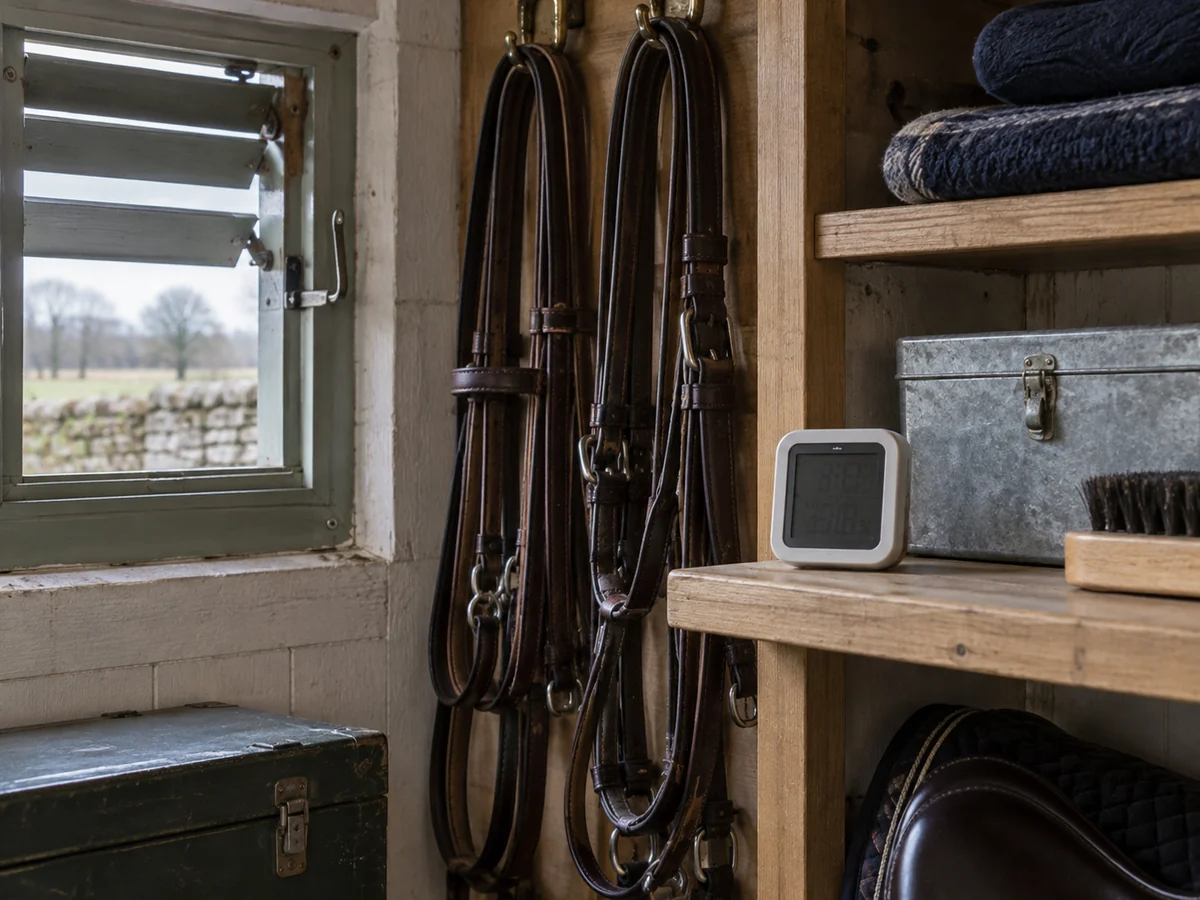
Look for a pattern
A musty smell tells you that something needs attention, but it does not identify the source. Notice whether the room is damp after rain, after wet rugs are brought in or throughout the week. Look for visible leaks, condensation and items pressed against cold walls. Keep a short record rather than moving everything into sealed boxes and hoping the problem is solved.
A simple moisture or humidity monitor can help show changes over time, but one reading is not a diagnosis of the building. Place it according to its instructions and compare ordinary conditions. If water is entering through the roof, wall or floor, report it to the person responsible for the premises and arrange suitable repair. Storage accessories cannot correct a continuing leak.
Give wet kit a suitable drying area rather than folding it into the main tack storage. Separate damp pads from leather saddles and let items dry as their manufacturers direct. A waterproof cover protects against an external splash only within its design; it may also hide dampness already trapped underneath. Check the equipment itself rather than judging the condition of the cover.
Leave enough space around stored items for inspection and appropriate ventilation. Do not pack cupboards so tightly that the back row is never checked. Follow the building's ventilation arrangements and seek professional advice if they are inadequate. Avoid improvised heaters or electrical alterations in a damp room; equipment and installation need to be suitable for the setting.
Keep the response manageable
Start with the most vulnerable or visibly affected items and follow their care guidance. If mould is present, keep affected equipment away from clean items and ask the manufacturer or a saddler about treatment and condition. Do not mask the smell with fragrance or assume a surface wipe has resolved every problem. Some materials need specialist attention before they are used again.
Once the immediate issue has been addressed, inspect the less visible places: beneath storage boxes, behind covers and around metal fittings. Set a practical reminder during wet periods and note whether repairs or changes to the drying routine have helped. The aim is a room in which clean equipment stays dry and can be checked easily, not a complicated monitoring system that nobody has time to maintain.
Reading & references