When leather tack needs conditioner
Conditioner should suit the particular leather and its maker's instructions; it is not a way to hide wear.
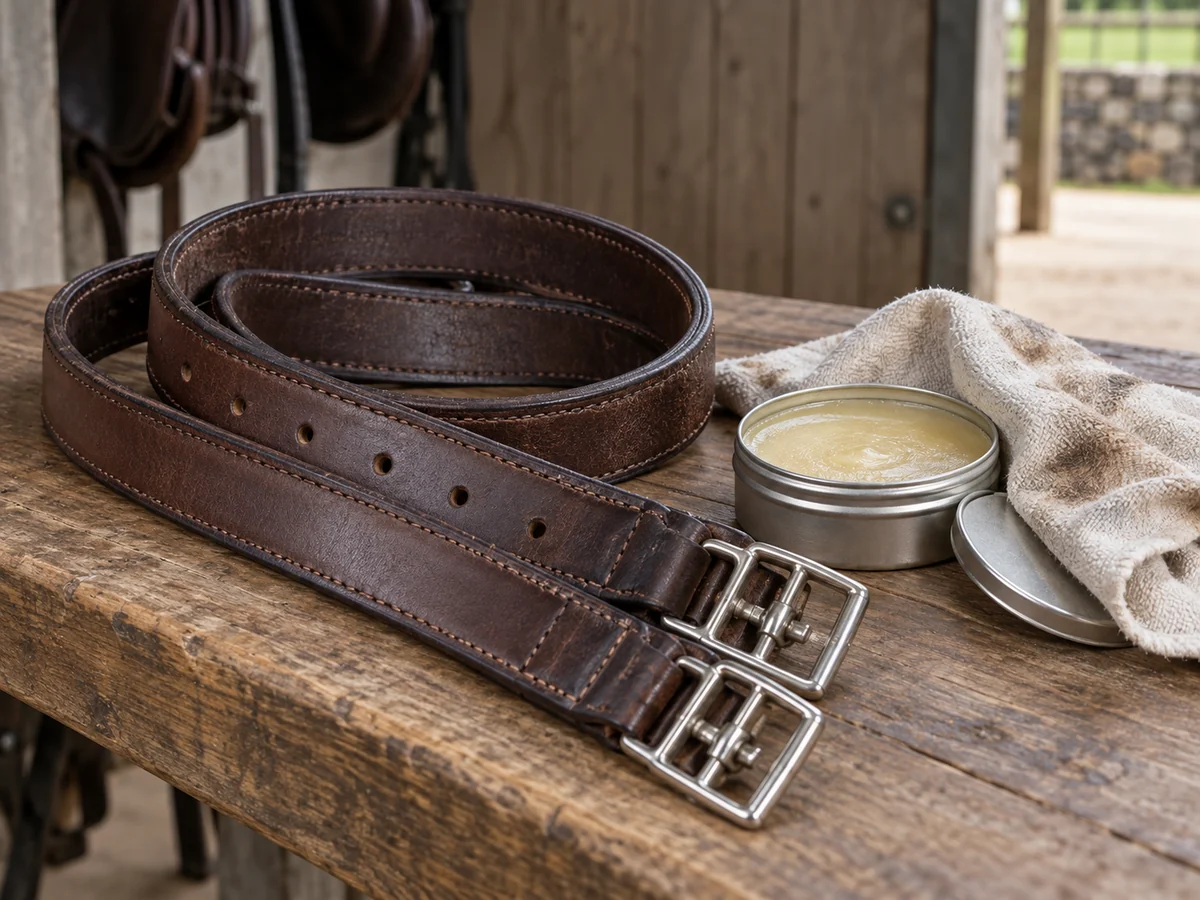
Check the care history
Before adding conditioner, find out what has already been used on the item. A second-hand saddle might arrive glossy from a recent treatment, while a regularly used bridle may simply need accumulated dirt removed. If you cannot identify the finish or previous product, ask the maker or a saddler. Guessing becomes especially unhelpful when several coatings have been added in succession.
Read the current instructions for the model, rather than relying on a general leather-care rule. Some makers specify a particular dressing and exclude oils or glycerine products. Even a brand's recommendations can change between ranges. Keep the leaflet or a saved copy of the product page with the equipment record so that the next cleaning session starts with the same information. Assess the leather after suitable cleaning and drying. Dirt and a heavy surface residue can disguise what you are looking at. Examine the places that bend around buckles and the reverse of straps, but do not force stiff equipment into an extreme fold as a home strength test. Visible damage should be assessed before the item is used again.
Apply an approved conditioner in the amount directed, using a clean cloth or sponge. More is not automatically more helpful. If the instructions call for a small amount, begin there and allow the stated time before judging the result. Avoid borrowing a product from a nearby bottle simply because it is also described as a balm; footwear and saddle finishes may need different treatment.
Separate maintenance from repair
A change in colour or softness after treatment does not prove that a load-bearing strap has recovered its strength. Cracking, stretched holes and failed stitching remain reasons to seek advice. Put a note on the item if it is awaiting inspection, particularly in a shared tack room where another rider might assume that freshly cleaned equipment is ready to go.
Keep a brief record when you change a care product: the item, the product and the date are enough. This makes a later question about a sticky finish or unexpected darkening easier to answer. Store the container securely and follow its handling directions. A useful conditioning routine leaves you knowing what was applied and why, rather than adding another layer each time the leather looks less shiny than a neighbouring saddle.
Reading & references