Check the rulebook before buying competition kit
Find the rules for the actual event before spending money on clothing or equipment described as competition-ready.
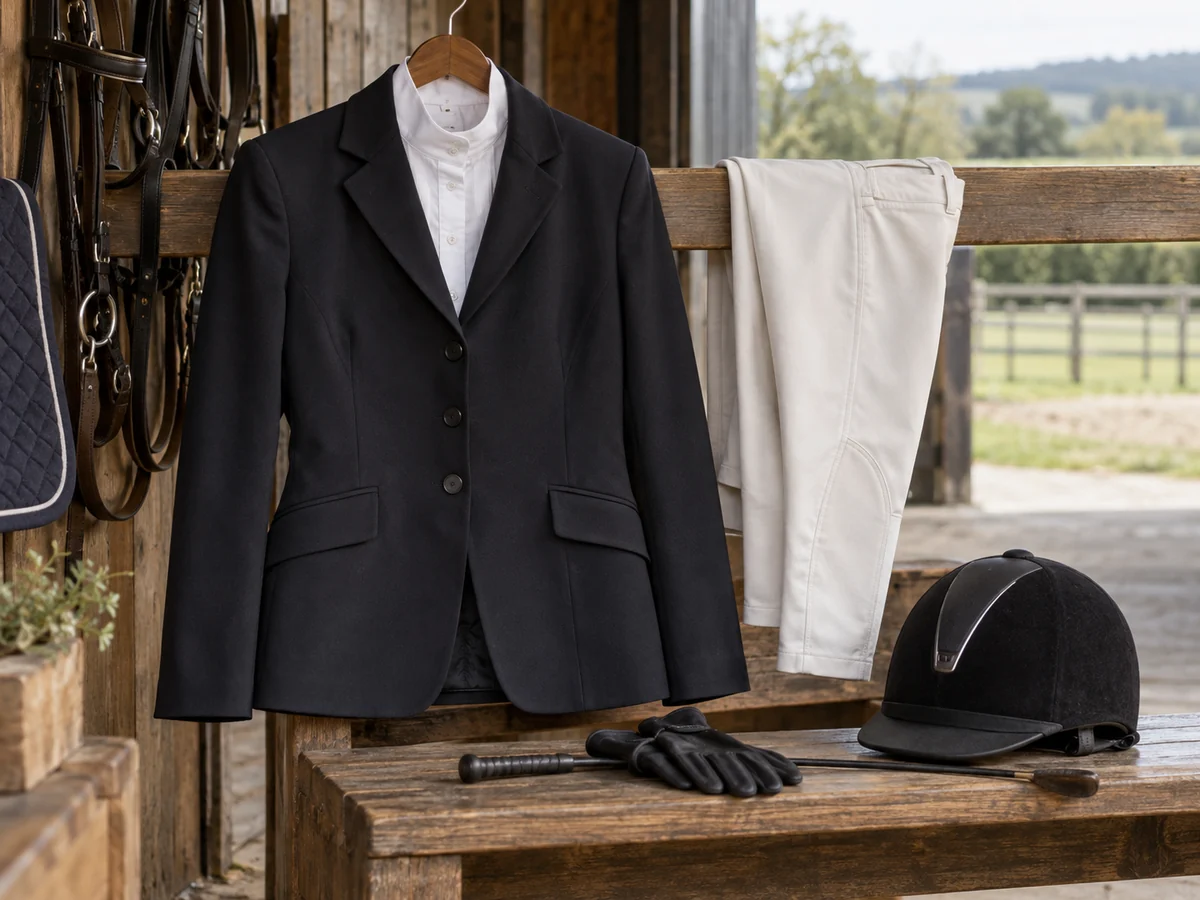
Identify who sets the rules
Start with the event schedule and the organisation whose rules apply. A venue can host different activities with different requirements, and unaffiliated events may adopt a published rulebook or state their own conditions. Read the current version rather than relying on what was accepted at the same venue several years ago. Ask the organiser to clarify any missing information.
Make a short list of the items that affect your entry: hat standards and style, body protection where required, footwear, clothing and permitted tack. The purpose is to avoid buying something unsuitable, not to turn the whole kit into a matching shopping list. Existing equipment may already meet the requirements if its condition and fit are appropriate.
Check safety labels exactly
A riding hat's standard, edition and any required certification mark need comparing with the stated rules. A broad advertisement saying approved is not enough. The British Horse Society directs riders to the relevant organisation's requirements, and its own guidance documents distinguish between activities. Have unclear markings checked by a trained fitter or the organiser before the event.
Body protector requirements also need precise reading. An air jacket, back protector and conventional body protector should not be treated as interchangeable. If a combination is permitted or required, follow the manufacturers' instructions for fit and use. Do not leave this decision until the collecting ring, when there is little time to obtain or correctly fit an alternative.
Try the outfit before the day
Wear the complete permitted arrangement during an appropriate practice session, with instructor guidance. Check that the jacket allows movement, the boots work with the stirrups and nothing interferes with protective equipment. A new formal outfit can feel different from everyday riding clothes even if each individual size seems correct.
Pack clean spares only where they are genuinely useful and suitable. Keep the schedule, entry details and any relevant organiser correspondence accessible. Check for late rule or timetable updates before travelling. If equipment is damaged during preparation, condition takes priority over simply having the right-looking item. Replacing a broken fastening with an improvised fix to make the outfit appear complete is not a sound way to get ready for a class.