Plan a tack collection before travelling
Confirm the item and the meeting details before travelling, then leave enough time to inspect what you are collecting.
Reduce uncertainty before setting off
Ask the seller to confirm that the item is still available and that the agreed components are included. Save the listing, photographs and messages somewhere accessible at collection. If you have arranged a professional assessment, confirm that appointment too. A long drive is not a reason to overlook a missing part or accept a different item from the one discussed.
Agree the address, time and a reliable contact method. Plan a sensible meeting arrangement and let someone know where you are going. Avoid arriving with no opportunity to inspect the equipment in good light. A hurried handover in heavy rain makes it harder to compare condition or read labels, and it creates pressure to make a decision before you are ready.
A tape measure, the manufacturer's measuring diagram and your notes can be useful. Bring the agreed payment method, but do not let having the money ready become a commitment to buy regardless of what you find. For specialist equipment, arrange appropriate assessment rather than relying on tools or a checklist to certify it yourself in a car park.
Compare the actual item with the listing. Check identifying marks, size and the areas of wear or repair previously discussed. If there is a difference, ask about it before completing the purchase. A new explanation may be reasonable, but it should be understood and recorded rather than brushed aside because both people want to finish quickly.
Plan the journey home too
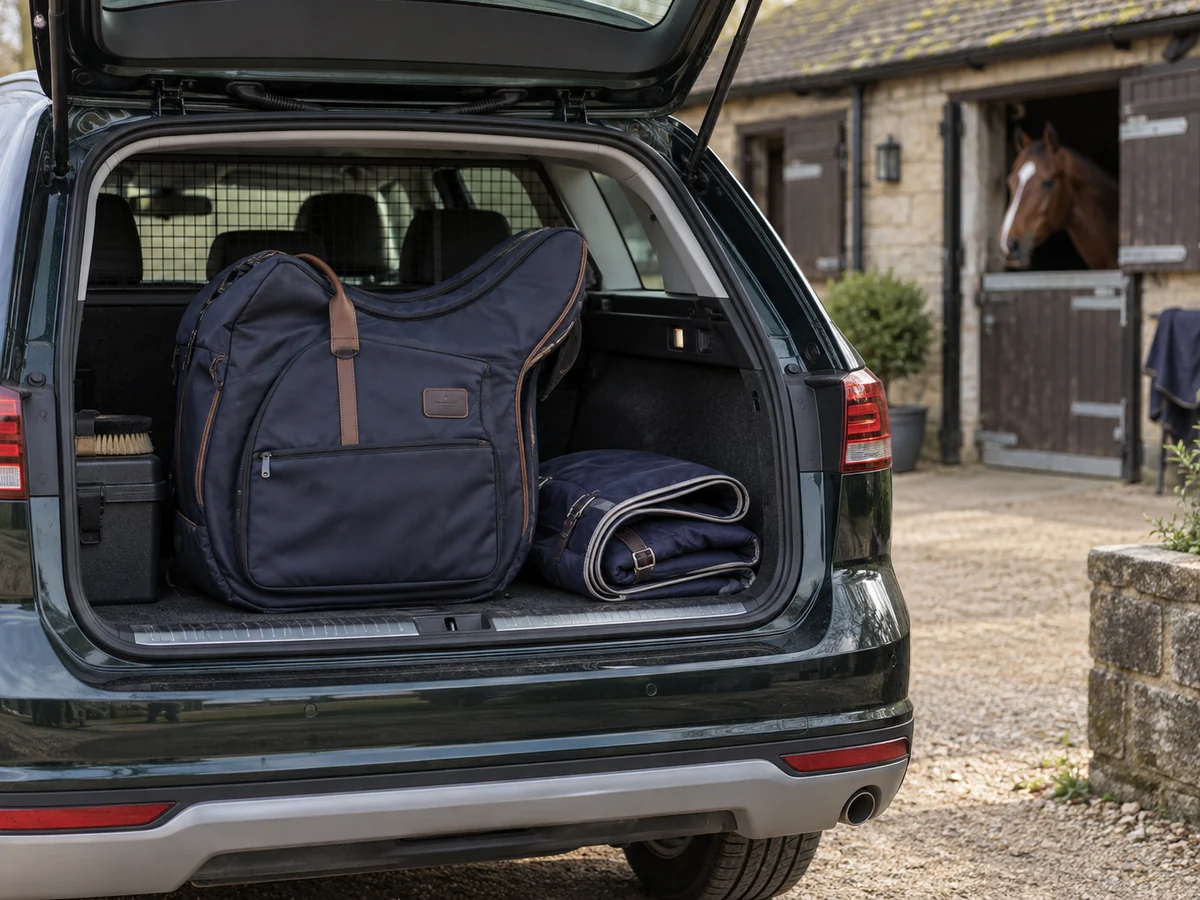
Prepare a clean, dry space in the vehicle so tack is not crushed beneath other luggage. Use a suitable cover and support for a saddle, and keep loose hardware from rubbing against leather. Small components are easier to account for in a separate labelled bag. Do not pack damp textiles tightly for a long period simply because that is the easiest way to fit them in.
Obtain a record identifying the item and the agreed payment, and keep any trial or return arrangement with it. On arriving home, inspect the equipment again before putting it into service. Collection gives you an opportunity to see the item, but it does not replace fitting or specialist condition checks. If a concern remains unresolved, pause the purchase or use until it can be addressed rather than allowing the effort of the journey to decide for you.
Reading & references