Cleaning synthetic tack without guesswork
Synthetic tack can contain several materials, so check each section before choosing a cleaning product.
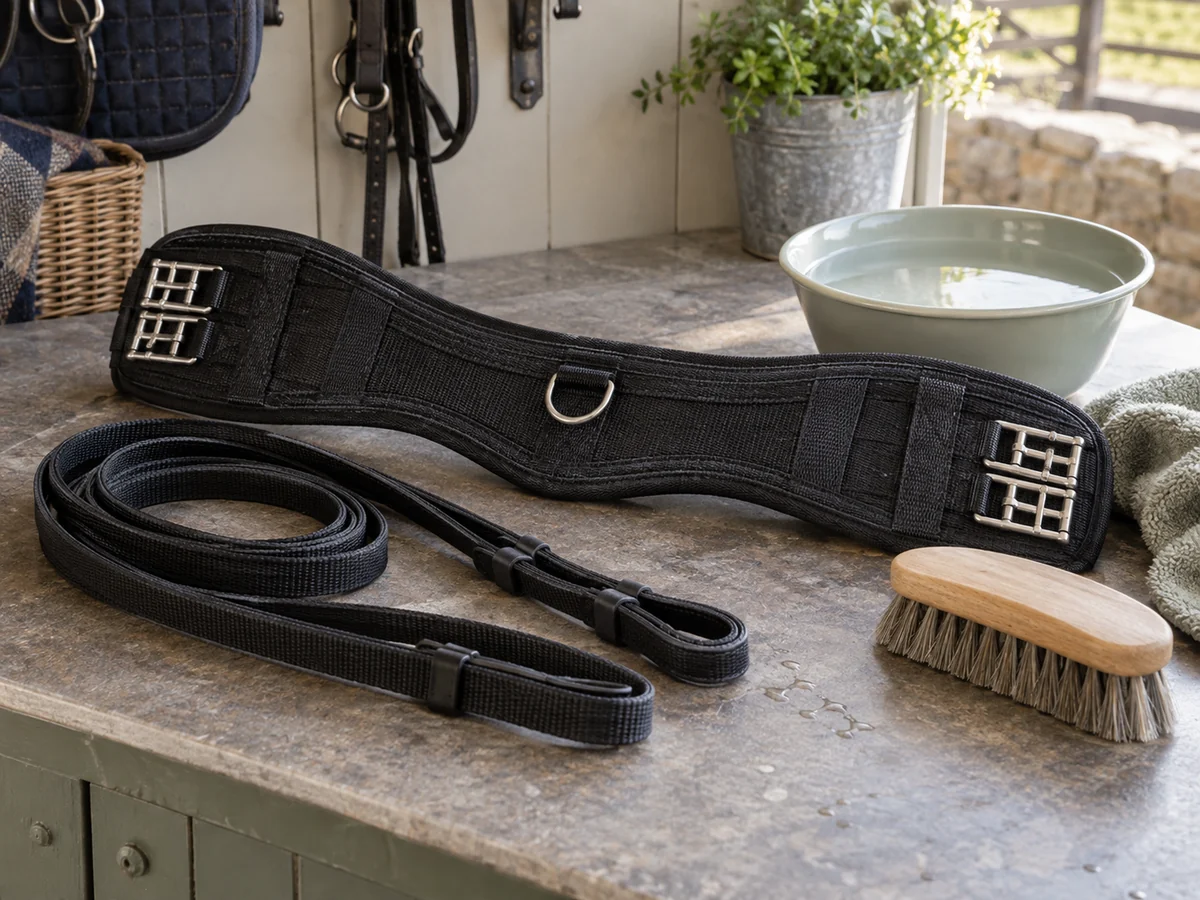
Read past the word synthetic
A synthetic saddle may combine a smooth outer surface, textured seat, different panels and leather straps. Treating all of those surfaces with the same bottle can create an avoidable problem. Identify the model and read its care instructions, including any notes about mixed materials. If a part has been replaced, check the instructions for that part as well.
Put the equipment on a stable support and remove loose dirt using the method the maker allows. Keep the cleaning cloth free of grit, and work where you can see seams and joins clearly. Do not assume that a water-resistant outer material makes the complete saddle suitable for soaking, pressure washing or being left wet in a closed storage box. For example, Thorowgood's T4 guidance distinguishes the smooth sections from its textured seat and knee rolls, and advises against several common leather-care products. That is a reason to consult the actual model's directions, rather than transfer a routine from a leather saddle. A synthetic surface that does not require conditioner gains nothing from an extra greasy layer.
Use a brush only where its type and stiffness are suitable. A tool intended for a different material may catch fibres or scratch a finish. Start with the less conspicuous part if the instructions recommend a test, and stop if colour transfers unexpectedly or the surface changes. Keep strong household cleaners out of the process unless the manufacturer specifically approves them for that item.
Let it dry and inspect the joins
Allow the equipment to dry as directed, with the different layers exposed where practical. Check around binding, stitching and areas where straps pass through. Dirt can conceal wear, and an easy-to-clean surface does not mean the structure needs no inspection. A split, lifting layer or damaged attachment should be discussed with the maker or an appropriate repairer.
Store the approved care information with the cleaning kit, especially if people at the yard use different saddle brands. Label the product containers clearly and avoid decanting them into unmarked bottles. A short model-specific routine is easier for everyone to follow than a general rule that all synthetic tack is cleaned the same way. It also leaves fewer surprises when the next person takes over the job.
Reading & references