Cleaning riding boots from the sole upwards
Give the sole, seams and closures their own attention before polishing the leather you can see.
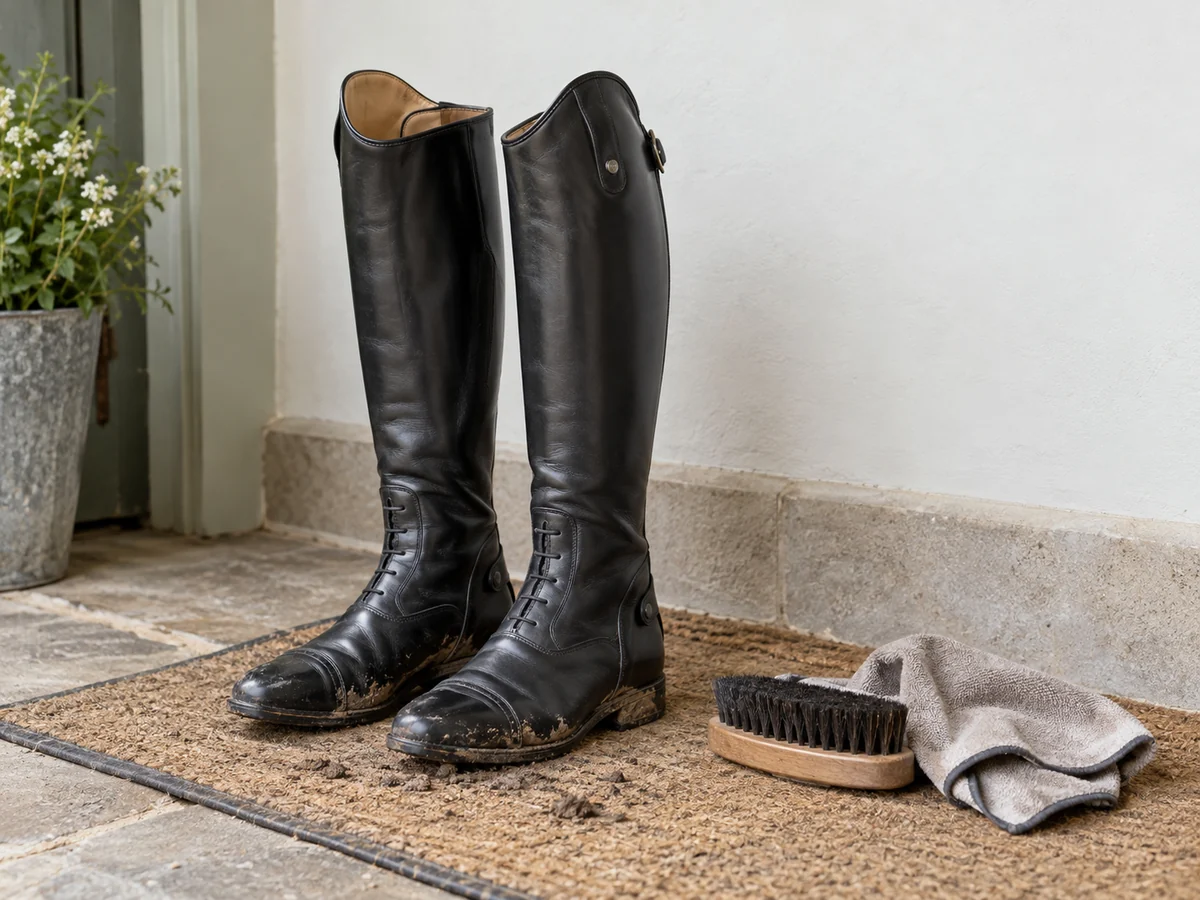
Start with the dirt underneath
Put boots on a surface that can catch loose mud. Remove dirt from the sole using a suitable brush, keeping gritty tools away from the upper leather. Check the junction between sole and upper as you work. A polished shaft can distract from a separating edge or trapped debris lower down, especially when boots are cleaned upright without being turned over.
Look at the material description before choosing a cleaner. Smooth leather, suede, nubuck and synthetic panels are not interchangeable surfaces. Follow the boot maker's instructions, including advice for mixed materials. Use separate cloths for dirty cleaning and finishing so that grit is not rubbed back into the upper. Work on a small, manageable area rather than soaking the whole boot in an attempt to save time. Open the boot as its design allows and check the zip, elastic and stitching. Remove trapped dirt gently and investigate a closure that has become stiff instead of forcing it. Keep cleaning products away from areas the instructions exclude. If a lining is damp, allow it time to dry properly; treating the outside does not deal with moisture inside the foot.
Boot trees or supports can help maintain shape where the maker recommends them, but they should fit without stretching the boot. Do not stuff a narrow shaft so tightly that it distorts. Set the pair somewhere suitable for natural drying, away from direct heat. A boot that feels dry on the outside may still need more time before it belongs in a closed travel bag.
Finish only when the boots are ready
Apply any approved care product in the quantity and manner recommended for the leather. More product is not automatically more protection. Keep the sole and other functional surfaces free of inappropriate polish or conditioner. Let the finish settle as directed before putting the boots against pale clothing or packing them beside a clean saddle pad.
Check the pair together before storing them. Uneven wear, a loose sole or a recurring zip problem deserves attention from a suitable repairer. Note repairs early enough to avoid discovering the problem on the morning of a lesson. A regular clean is useful partly because it gives you a quiet moment to notice these changes, while there is still time to decide what to do about them.
Reading & references