A manageable routine for cleaning leather tack
A small cleaning kit and a repeatable order make regular tack care easier to fit around a ride.
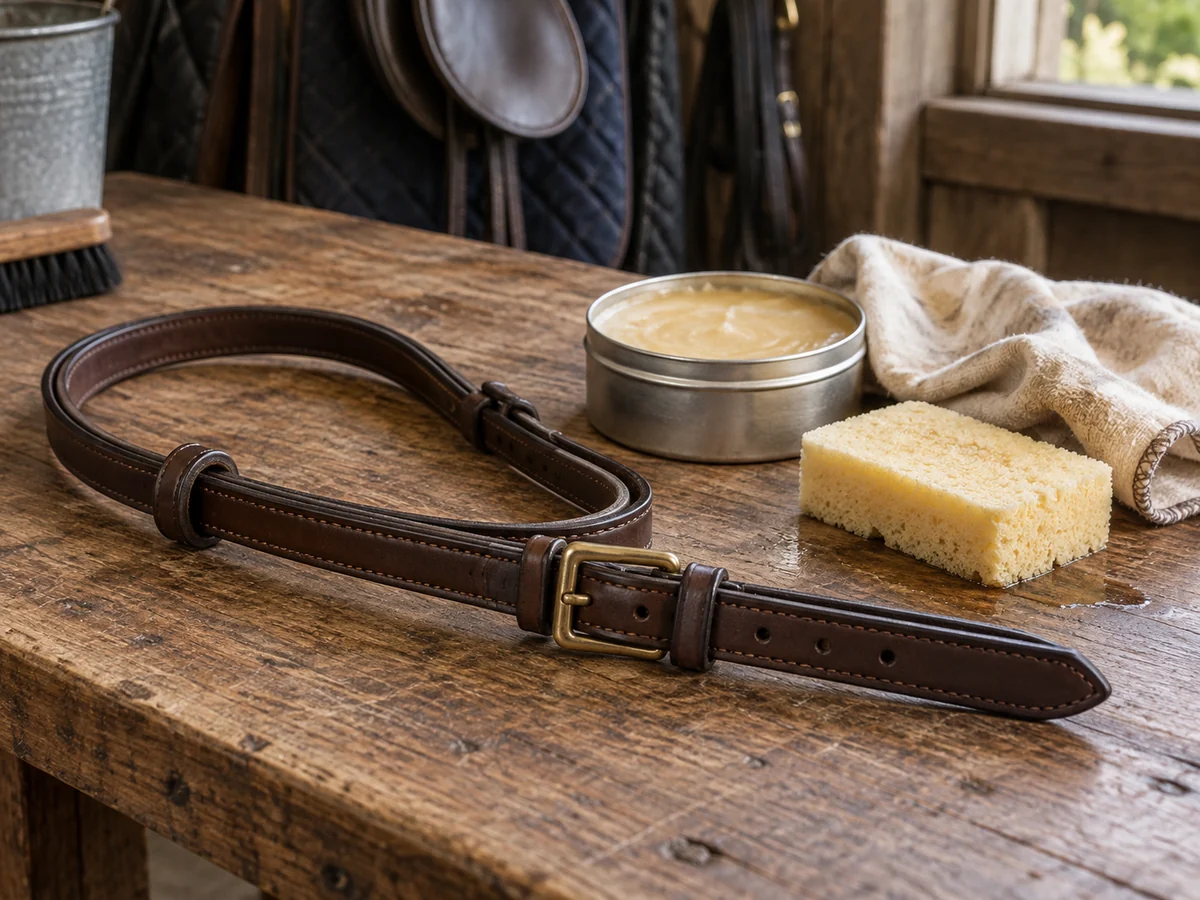
Start with the item in front of you
Put the saddle or bridle somewhere stable, with enough light to see the underside as well as the polished surface. Find its maker's care guidance before opening a cleaner. Leather finishes differ, and a product recommended for one saddle may be specifically discouraged for another. A familiar smell or a traditional name on the tin is not a reliable compatibility check.
Keep a clean cloth, a separate cloth for dirt and a small container of water within reach. Use only the amount of moisture and product permitted for the item. If every cloth is already gritty, stop and change them. Working dirt back across a clean flap makes the job longer and can mark the finish you are trying to preserve.
Follow a route you can remember
Work around the equipment in the same order each time. On a bridle, that might mean one strap at a time, including the reverse and the places hidden by keepers. On a saddle, lift the flaps and inspect the accessible surfaces without dismantling fittings. Let the routine bring neglected areas into view rather than concentrating only on what can be seen from a distance.
Cleaning is also a chance to notice a change. A loose thread, an enlarged hole or a buckle that no longer sits properly deserves attention before the next use. Keep questionable equipment apart from the ready-to-use set and ask a saddler about it. Applying more dressing may alter its appearance, but it does not establish that a damaged part is sound.
Finish the job before covering it
Allow the cleaned item to dry as its instructions require. Conditioning, where appropriate, is a separate decision rather than the automatic final layer of every clean. Read the amount and application directions, and use a clean applicator. Do not use the same sponge for muddy metalwork, leather treatment and an item that goes into the horse's mouth.
Return the equipment to its own rack or hook once it is ready for storage. Put the lids back on products and leave reusable cloths clean and able to dry. Keeping the kit simple helps: a small box of suitable products is easier to use correctly than a crowded shelf of half-identified bottles. If several people share the work, leave the relevant care instructions beside the kit so the next person can follow the same routine.
Reading & references