Rinse and inspect a bit after use
Cleaning a bit gives you a clear view of the mouthpiece, joints and rings before it is used again.
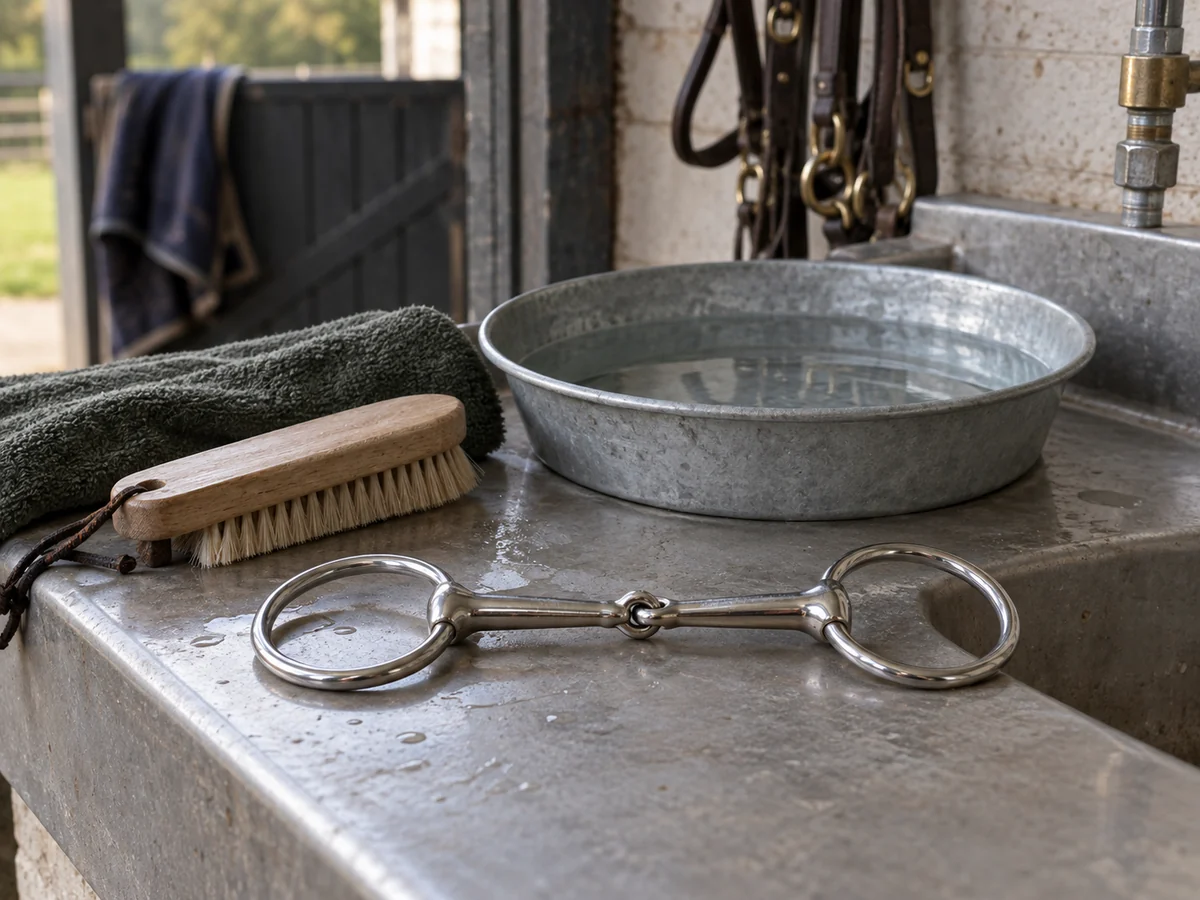
Keep the mouthpiece away from the leather kit
Use a cleaning container and tools reserved for the bit, rather than a sponge carrying leather conditioner. Remove or protect the surrounding leather according to the bridle's instructions. Work over a clean surface where a small loose component would be noticed. If you are unfamiliar with taking the bit off, ask an experienced person to show you and check the reassembly.
Rinse away ordinary residue using the method recommended for the bit's material. A smooth metal mouthpiece, a coated one and a flexible synthetic design may have different care requirements. Identify the product before applying a cleaner. Household metal polish is not an automatic choice for something used in a horse's mouth, even if it produces an attractive shine on other objects. Pay attention to joints, ring openings and the edges around guards or other fitted parts. Move a joint only in its normal range and avoid forcing a mechanism to clear trapped dirt. Use an appropriate soft cleaning tool where the manufacturer permits it. Thorough rinsing matters whenever a suitable cleaning product has been used; follow its directions rather than leaving a surface film behind.
Inspect the clean item for sharp edges, damaged coatings, unusual wear or a joint that no longer moves as expected. Do not try to grind, file or straighten a suspect bit into service. Take it out of use and ask the maker or a suitable equestrian professional about replacement. An inexpensive repair attempt can change a carefully shaped surface in ways that are difficult to assess at home.
Know which appearance is expected
Some materials develop a surface change as part of their intended use, while others should not show the same appearance. The manufacturer's identification and care information are more useful than comparing photographs of unrelated bits. If you do not know whether a mark is expected, keep a clear photograph and the product details for your enquiry instead of scrubbing harder.
Dry and store the bit as directed, and check the bridle is correctly reassembled before it returns to the horse. Put clean equipment where it will not pick up stable dust or cleaning chemicals. Check any orientation markings against the maker's instructions when reattaching the bit, and have uncertain attachments checked before riding. Keep its model details with the bridle record so a replacement can be identified accurately.
Reading & references