What brushing boots cover
The reinforced inner area is the clue to their intended use, but it still needs to sit in the correct place.
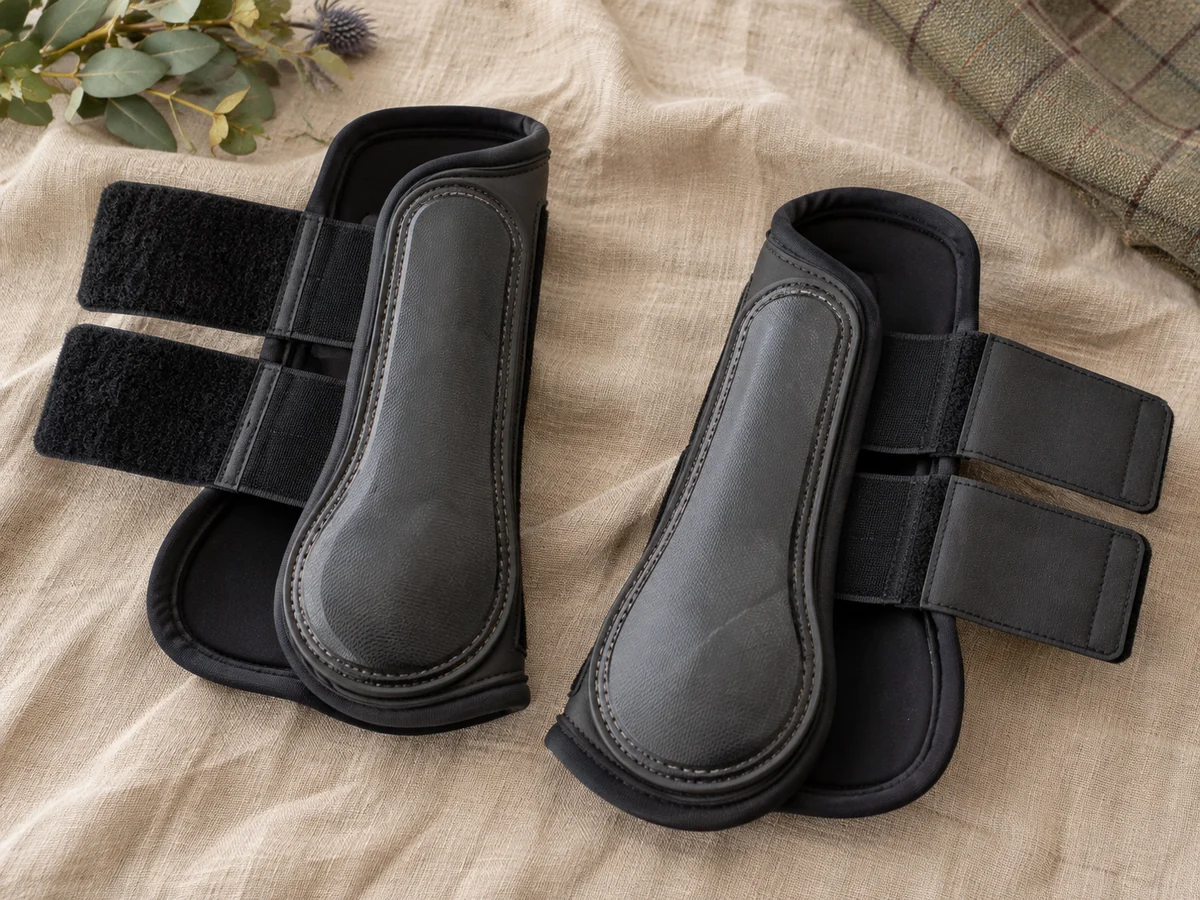
Look for the strike area
Brushing boots are designed to provide protection where one leg may contact the other during movement. Many have a reinforced section on the inside, with a shaped wrap and adjustable fastenings around the lower leg. The exact coverage varies. Inspect the manufacturer's diagram so that the strike area, top and bottom are identified before the boot is placed on the horse.
Do not assume that every protective boot in the tack room is a brushing boot. Tendon, fetlock and travel boots have different shapes and purposes. Product names can also vary. If the label is missing, ask someone knowledgeable to identify the item rather than deciding from its colour or the number of straps.
Size is more than circumference
A boot must suit the length and shape of the leg as well as close around it. A fastening that reaches does not prove that the upper edge, lower contour or protective panel lands appropriately. Follow the maker's sizing instructions and have the final fit checked. Where front and hind versions are specified, keep them identified rather than treating the four pieces as identical.
Feel the lining before use. It should be clean, smooth and free from hard lumps of dried mud. Check for worn edges, compressed areas and loose stitching. A soft lining can conceal grit surprisingly well, especially after a wet schooling session. Brushing the visible outer surface is not enough if the part against the horse remains dirty.
Make removal part of the routine
Use brushing boots only for the purpose and duration appropriate to the horse, activity and product. Remove them afterwards and check the legs for rubbing or other changes. If the horse repeatedly knocks itself, discuss the underlying issue with the relevant professionals rather than assuming a thicker strike panel is the complete answer.
Open the fastenings for cleaning, follow the washing instructions and let the boots dry fully. Avoid storing a damp pair pressed together in a sealed bag. Before the next use, confirm that the fastenings still hold and the boot has not distorted. If one side is badly worn, show the pattern to the instructor or vet as appropriate; useful information can disappear when damaged equipment is discarded without noting what changed.