Taking useful measurements before bridle shopping
Useful measurements describe individual pieces and adjustment ranges, rather than relying on one overall bridle size.
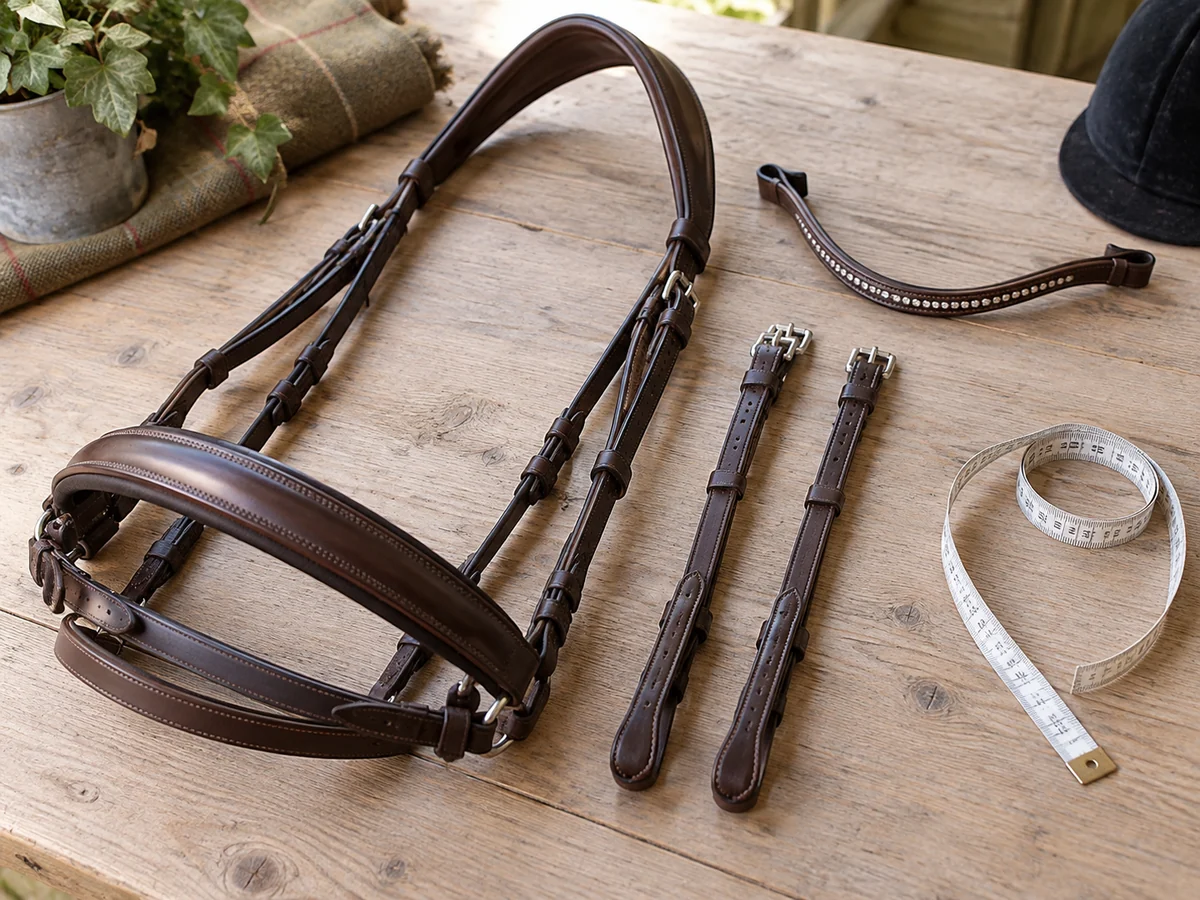
Record the pieces separately
A horse can need different sizes in different parts of a bridle. A full-size headpiece does not guarantee that the matching noseband or browband is right. Before shopping, identify what fits in the current arrangement and what needs assessment. If the existing bridle is uncomfortable, ask a qualified bridle fitter for advice rather than using all its measurements as a pattern to reproduce.
Photograph the assembled bridle so you can remember how the parts relate, then record the maker and model where possible. Measure only in the way requested by the proposed manufacturer's guide. A cheekpiece length including a buckle is not directly comparable with a measurement that excludes it. Write the starting and finishing points beside each number, not merely a list of centimetres.
Keep the adjustment range visible
Record which holes are normally used and whether a piece is already at the end of its adjustment. This helps explain why a replacement of the same labelled size might not be useful. Do not make extra holes as the first response to an unsuitable component, particularly where doing so would crowd existing holes or place hardware awkwardly on the horse's face.
With a mix-and-match bridle, ask whether the different pieces are designed to connect. Strap widths, buckle sizes and routes through the headpiece can vary. Two parts described as cob are not necessarily compatible. Send clear photographs and measurements to the maker if necessary, and ask which specific replacement part belongs to the model rather than buying by colour alone.
Use the numbers to prepare a fitting
Measurements help narrow the choice; they do not establish the final fit on the horse. The shape of padding, the position of buckles and the relationship between browband and headpiece still need attention. Arrange a fitting check and follow the retailer's instructions for keeping a new bridle clean during any permitted trial. Keep labels and packaging until you have decided.
After the bridle has been assessed, save the final component sizes and settings together. This is useful if a cheekpiece is lost or a browband later needs replacing. It also prevents a clean-and-reassemble session from relying entirely on memory. Check the bridle on the horse each time it is used; a written setting records an arrangement, but it does not remove the need to notice changes or mistakes.
Reading & references