Protective boots and bandages have different jobs
Coverage, application and maintenance differ, so first decide what protection is actually needed.
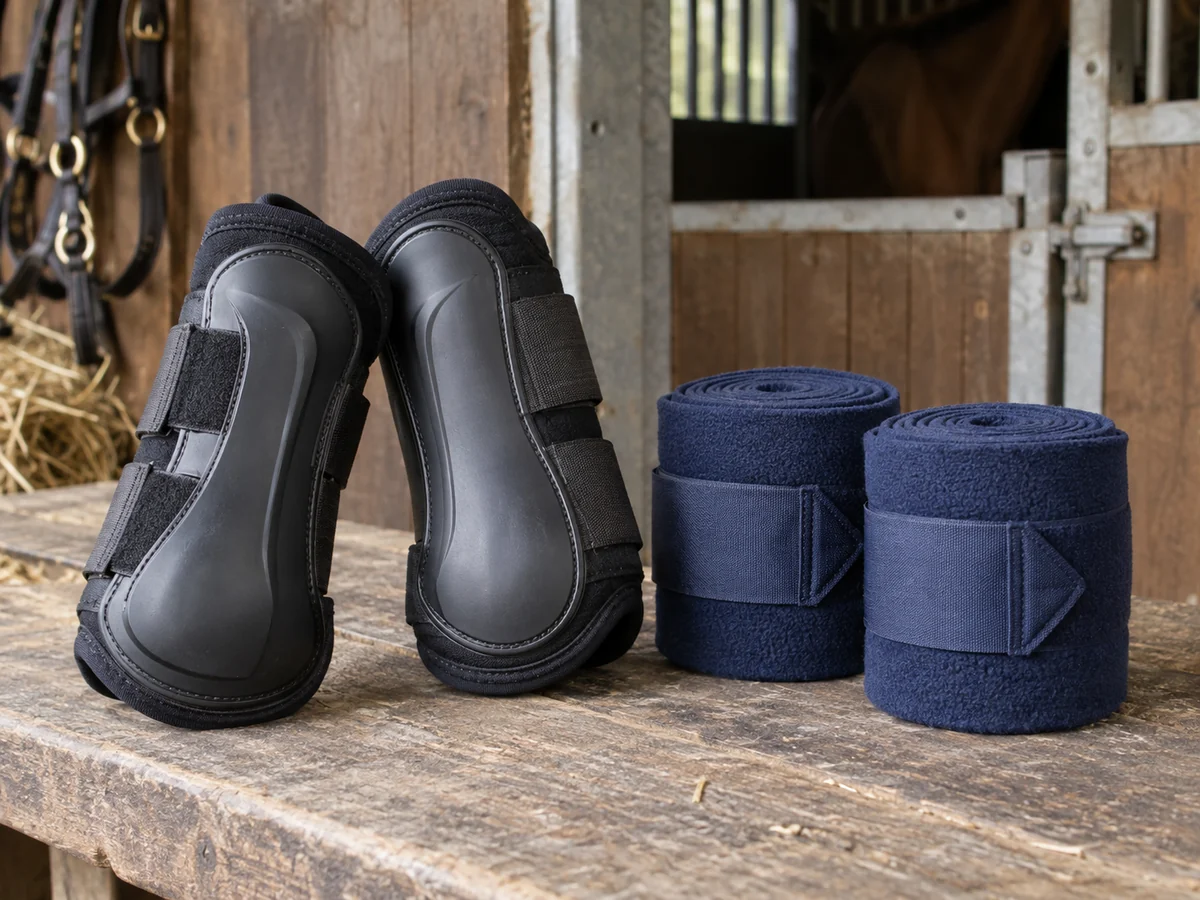
A matching set is not a reason
Horse boots and bandages are used for particular purposes, but neither should be added simply because the rest of the equipment is colour-coordinated. Ask the instructor or other appropriate professional what the horse needs for its work. A brushing boot, travel boot and stable bandage are not interchangeable even though all cover part of a leg.
Boots have a manufactured shape and fastening arrangement. Bandages depend much more on how they are applied and, where required, the padding beneath them. Incorrect tension or placement can cause harm. Learn bandaging in person from someone competent and do not use a written wrapping sequence as your first instruction on a horse.
Coverage has boundaries
A boot protects only the area its design covers and cannot guarantee that an injury will be prevented. Check which leg and purpose the model is intended for. Front and hind versions, where specified, may differ. Size labels should be read against the manufacturer's guidance, then checked on the individual horse rather than transferred from another brand.
Cleanliness is part of the choice. Grit, dried sweat or a creased lining against the leg can create problems beneath apparently smart equipment. Before application, inspect the inside as well as the outer strike area. Hook-and-loop fastenings need to close properly, and damaged stitching or distorted shells should be assessed rather than hidden beneath a replacement strap.
Use includes taking them off
Follow the product's directions and professional advice about when protection is needed and how long it should remain on. More coverage is not automatically better, particularly where heat and moisture build up. Remove equipment after the relevant activity, inspect the legs and allow the items to dry or clean them as directed. Do not leave wet protection on because the next session is later that day.
If there is swelling, heat, soreness or an unexplained change in movement, seek appropriate veterinary advice. Boots are not a treatment for an undiagnosed problem. Keep sets together and clearly identify any directional pieces so that a helper can follow the same arrangement. A short note with the storage bag can record the model and washing directions without encouraging someone to guess how an unfamiliar item is fitted.