Read the maker's horse boot size guide
A horse's height is only a rough starting point; use the measurements and fitting instructions for the exact protective boot.
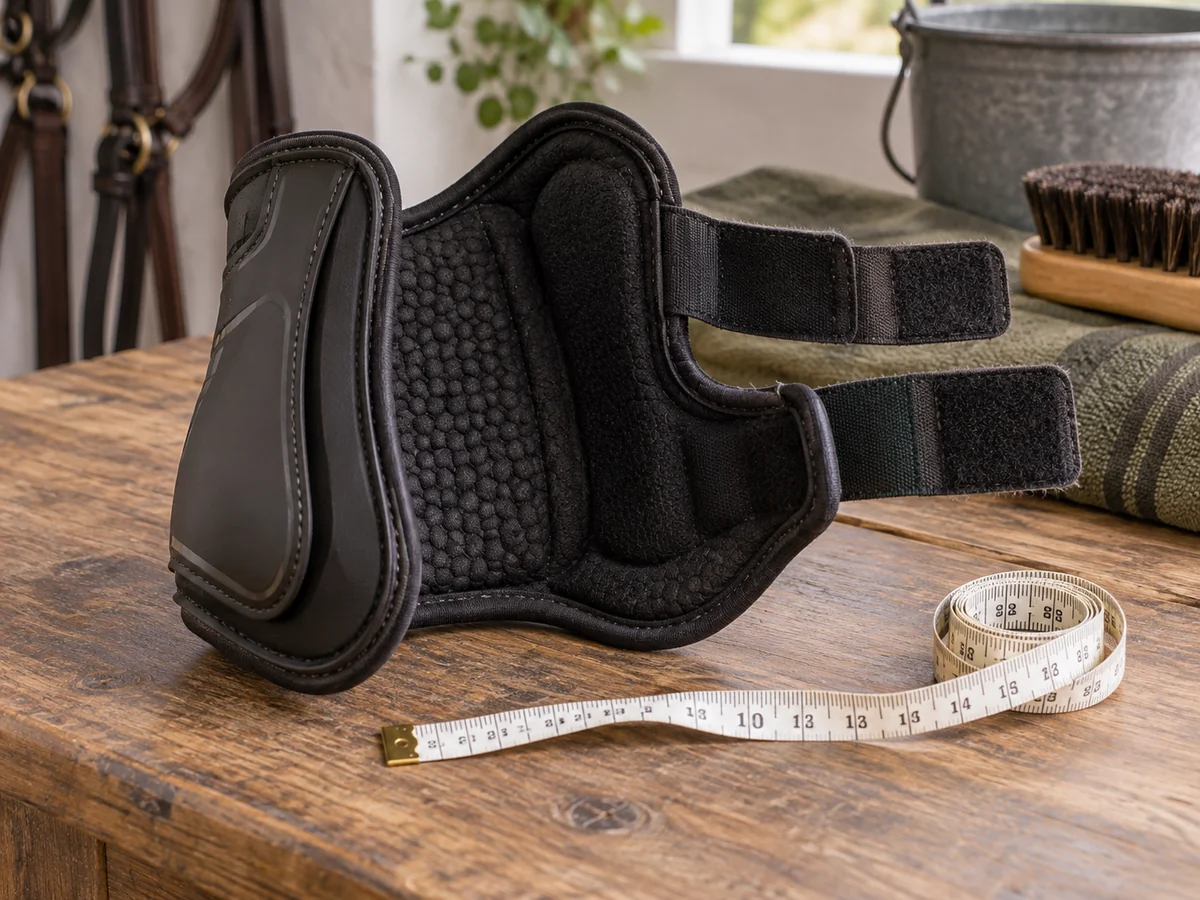
Open the guide for that model
A size chart for one type of horse boot should not be used for every product carrying the same brand. A brushing boot, an overreach boot and a travel boot cover different areas and may use entirely different measurements. Open the chart linked to the exact product and check whether it describes the horse, the boot laid flat or a general size suggestion.
If a chart uses letters beside a drawing, follow those points precisely. A circumference taken lower on the leg is not the same measurement as one taken at the marked position. Ask the manufacturer or retailer to explain any unclear diagram before ordering. It is better to resolve that uncertainty than to choose the larger option automatically and discover that the shape is wrong.
Have a competent person help with measuring and fitting, particularly around a horse that is unfamiliar or restless. Do not spend time crouching close to a leg simply to obtain a precise number from an online chart. The measurement is only preparation; safe handling and an appropriate assessment of the finished fit are more important than forcing the process to match a diagram.
Look at height and fastening together
A boot can close around the leg while being too tall, too short or poorly shaped for the intended coverage. Check the maker's instructions for its position and strap overlap. Avoid compensating for an unsuitable size by pulling the fastenings harder. Ask for advice if the boot rotates, slides or appears to interfere with normal movement.
When choosing between sizes, send the actual measurements and model name to the retailer rather than only the horse's height. If you already use a well-fitting product, provide its details as background, but do not assume the same letter size will transfer. Different materials and contours can change the way an apparently similar boot sits.
Keep new boots clean while making any fitting check permitted by the seller. Confirm those arrangements in advance and retain the packaging. After the choice has been assessed, note the model, size and which legs it is intended for. Recheck the fit during use and after cleaning, especially if the padding or shape changes. The chart helps you order; it does not replace looking at the horse and equipment together.
Reading & references