Dry wet riding boots without hard heat
Wet boots need time, airflow and care appropriate to their materials, not a quick blast of heat.
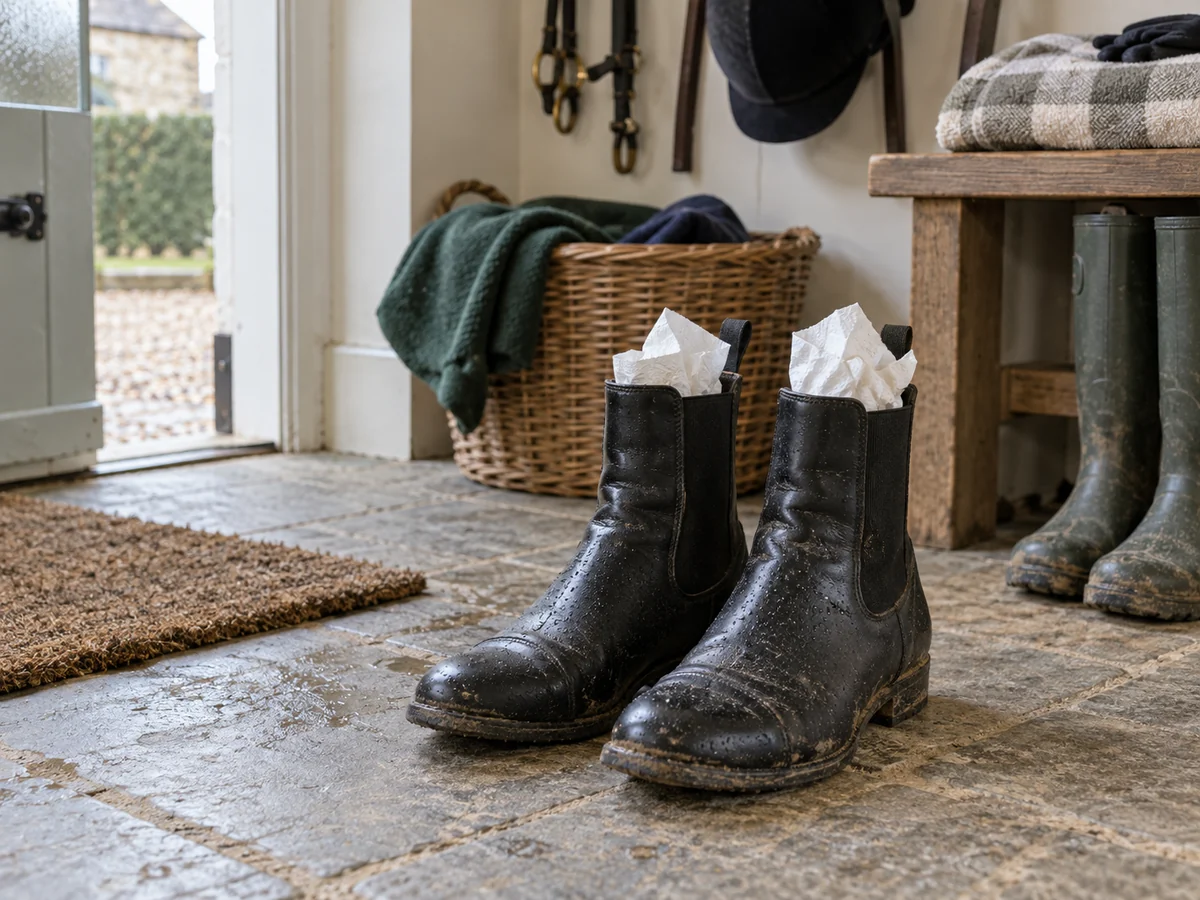
Open them without distorting them
After removing wet boots, undo the closures enough to let air reach the inside. Follow the maker's instructions for removable insoles or liners; do not pull out a component that is fixed in place. Remove loose surface mud carefully before it is spread around the drying area. Keep the pair upright or otherwise supported in a way that suits their construction.
Choose a ventilated place away from a radiator, fire or strong direct heat. Drying speed is not the only concern: leather, adhesives, linings and elastic all belong to the same boot. An improvised hot-air treatment can affect those materials differently. If the maker recommends a specific drying aid, follow its limits rather than assuming that every heated device is interchangeable. The toe, heel lining and seams may hold moisture after the shaft feels dry. Check these areas before deciding that the job is finished. If absorbent paper is recommended, use suitable plain material and replace it when damp; do not pack the boot so tightly that its shape changes or airflow is blocked. Avoid printed material that could transfer colour to a pale lining.
Keep wet boots apart from dry kit. A closed bag is useful for transport, but it should not become the place where a soaked pair spends the night unnoticed. Empty the bag after the journey and dry it too. If several people use the same space, label pairs or give each one a clear position so that equipment is not moved into storage prematurely.
Plan around the drying time
Inspect the boots once dry, then carry out the care recommended for their material. Notice any change in shape, stiffness or the way a closure works. Seek advice about damage rather than trying to soften or stretch it away with an unsuitable product. Dryness by itself does not establish that a boot is ready for riding again.
Repeatedly wet boots can make the daily routine awkward. Consider whether a different pair is appropriate for muddy yard jobs, reserving riding footwear for its intended use. Any spare used for riding still needs to be suitable for the rider and stirrups. The practical aim is to give equipment enough time to recover between uses, without solving a drying problem by creating a fit or footwear problem.
Reading & references