A body protector needs room to work properly
A protector must cover the intended areas while allowing the rider to sit and move normally.
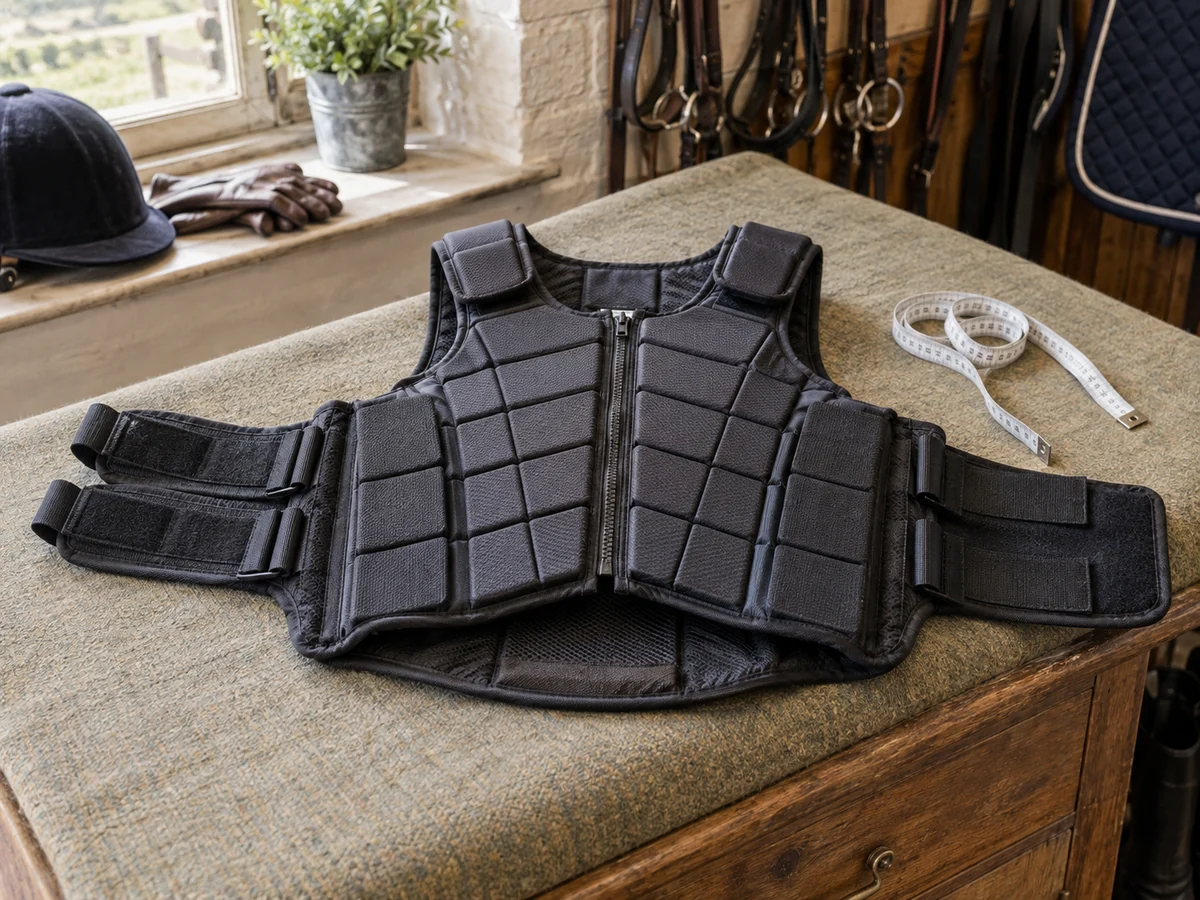
Try it with riding in mind
Arrange a fitting with a suitably trained retailer and wear the sort of close-fitting layer you will use underneath. Heavy everyday clothing can interfere with the assessment. Tell the fitter about the riding you do and any other protective equipment that must be worn with it. The right arrangement depends on the complete outfit, not just the protector's chest measurement.
A body protector needs the intended coverage without pushing upwards, catching the saddle or preventing useful movement. Ask to sit in a riding position during the fitting. Explain where you feel an edge or restriction rather than assuming discomfort is inevitable. Different cuts and size combinations may suit different proportions even when the main measurement is similar.
Read the adjustment indicators
Many designs have marked adjustment areas or specific rules about overlap. Learn what those markings mean and where the closures should sit. A zip that can be forced shut does not prove that the size is correct. Do not remove panels, cut edges or exceed the manufacturer's adjustment range to make a garment fit.
The label also identifies the standard and protection level. BETA's current guidance recommends looking for the 2018 label when buying new and explains the different levels. Check the current requirements for your activity with the organiser. A fashionable back protector, an inflatable jacket and a conventional body protector are not automatically equivalent products.
Recheck the complete outfit
If you plan to wear an air jacket as well, both manufacturers' instructions and the relevant rules need to be followed. The combination must allow the inflatable garment to operate as intended. Do not choose a tight outer coat simply because everything looks neat while the air jacket is uninflated. Ask the fitter to assess the full arrangement.
Children need regular fit reviews as they grow. Adults should also check after changes in body size or clothing. A protector bought with excessive growing room can fail to sit as intended now; one kept after it has become too small can leave inadequate coverage.
Condition remains part of protection
Follow the maker's care, inspection and replacement guidance, especially after a substantial impact. BETA warns about hidden damage and ageing materials. Store the protector in a suitable dry place without crushing it beneath tack. If a panel is distorted, a closure fails or the history is uncertain, seek advice before using it. A correct label cannot compensate for damage or an unsuitable fit.
Reading & references