Questions to ask about a bitless bridle
Removing the mouthpiece changes where the equipment acts, but does not remove the need for careful fitting and instruction.
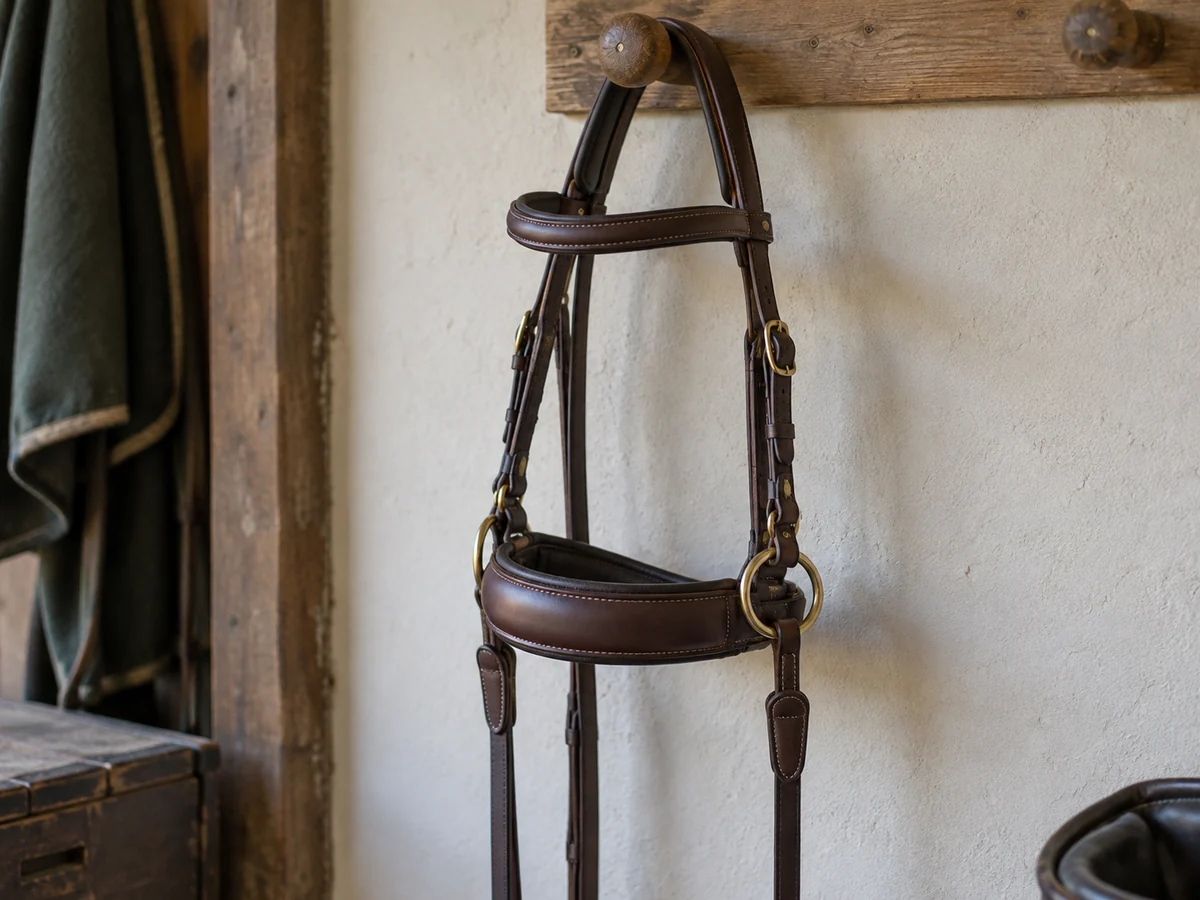
Ask how the design works
Bitless bridles form a varied group. Some connect the reins directly beside the nose, while others route straps beneath the jaw or use levered components. The absence of a bit does not make those arrangements equivalent. Ask the maker to explain where pressure is applied, how it releases and which adjustments are essential for that particular model.
Avoid descriptions that reduce the choice to gentle versus harsh. Pressure still acts on parts of the head, and poorly positioned equipment can be uncomfortable or unsafe. The nose section, straps and any metal components need assessing against the individual horse's anatomy. A qualified fitter familiar with the design is more useful than a size label or a photograph of another horse wearing it.
Why are you considering the change?
A horse showing discomfort with a bitted bridle needs appropriate investigation. Dental pain, mouth injury or another health concern should be discussed with the relevant professional, rather than hidden by immediately changing equipment. If a bitless option is recommended during recovery, ask for clear instructions about use, fit and review. Equipment choice is not a diagnosis.
For a training-related change, involve the instructor. The horse and rider need to understand a different arrangement, and initial use should be planned in an appropriate controlled setting. Do not make the first experiment on a road or an unfamiliar open route. Familiarity with one bridle does not guarantee that the response to another will be the same.
Check practical restrictions before buying
Ask whether the intended activity permits the design. Competition rules and riding-centre policies may distinguish between different bitless arrangements or prohibit them for a particular class. Obtain the current rule rather than relying on a retailer's broad description that a product is suitable for dressage, hacking or schooling.
Keep the fitting instructions and identify replacement parts before they are needed. The routing of a cross-under strap or the orientation of a component should not be reconstructed from memory after cleaning. Inspect all pressure-bearing surfaces and moving connections, and seek help if the bridle rubs, shifts or does not release as expected. A simpler-looking front can still contain a system that needs careful attention throughout its route.