Get help before changing a bit size
Width is only one question: mouthpiece shape, thickness and cheek design also need individual assessment.
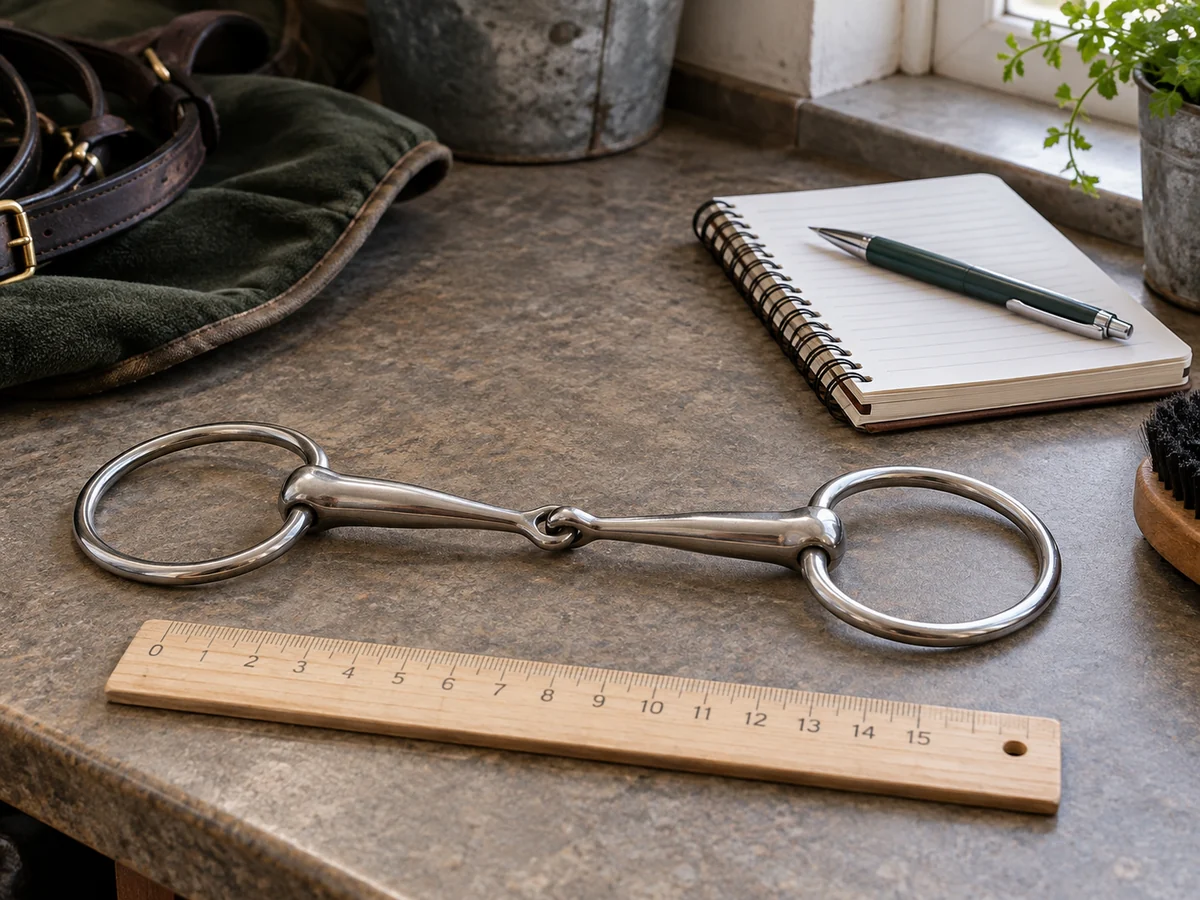
Describe the change you are considering
Before ordering a different bit size, write down what has prompted the idea. Is there visible rubbing, a change in behaviour or simply uncertainty about a second-hand bridle? These are different starting points. A horse becoming difficult to ride should not automatically be treated as a signal to buy another bit. Discuss discomfort or a sudden change with the appropriate equine professional.
Identify the current bit accurately. Record the make, mouthpiece, cheek type and marked size, and take clear photographs while it is off the horse. Similar-looking bits can differ in their central joint, curvature or thickness. This information helps a qualified bit or bridle fitter understand what is being used and prevents an online replacement from being chosen by appearance alone.
A wider version may not answer the problem
Width describes only one dimension. The space within the individual horse's mouth and the shape of the mouthpiece also matter. Changing from a loose ring to a fixed cheek can change the fitting discussion, so do not transfer a familiar measurement without asking. Manufacturer guidance is useful for identifying a product, but an in-person assessment considers the horse as well.
Avoid putting fingers or improvised measuring devices into an unfamiliar horse's mouth to copy an online test. Ask an appropriately qualified person to assess the relevant dimensions safely. If dental discomfort is suspected, involve the vet or suitable dental professional. A shopping chart cannot establish whether the mouth is comfortable or explain all the reasons for resistance during work.
Arrange a controlled decision
Ask whether the fitter can recommend a trial process and what should remain unchanged while a new option is considered. Changing the noseband, reins and bit together makes it harder to describe what happened. Keep factual notes about the equipment and observations rather than declaring a result after one unusually good or difficult ride. Follow advice about stopping if discomfort appears.
Before paying, confirm the exact specification, what the seller's hygiene and trial arrangements allow, and whether the pictured item is the one supplied. Do not assume a used bit can be returned after riding simply because a new product from another shop could be. Keep the chosen model and size in your records, together with the fitting advice, so later replacement enquiries start from the complete specification.
Reading & references